Connie Murphy is a senior FDA investigator dedicated to protecting public health and safety. While conducting routine inspections, intrigue and danger intervene, and she gets involved in drug smuggling, food poisoning, economic fraud, industrial espionage, human trafficking, and identity theft. She uses her interviewing and interrogation skills to uncover problems when people are less forthcoming, hide documents or fail to tell the truth.
Each story is based on real FDA cases with the names changed to protect the guilty.
About the Connie Murphy Mysteries(eBooks 10-12):
KILL A THIRST –Local hospitals are overwhelmed with food poisoning cases. Is someone trying to eradicate the elderly and homeless populations on Long Island? Connie must navigate the competitive government organizations to determine if the cases are connected and use her investigative expertise and tenacity to reveal the cause for the illnesses before more people die.
COMPOUND A PROBLEM – When Connie follows up a routine consumer complaint, she learns the company is making a nutritional supplement without FDA approval. The more questions she asks, the more pushback she gets. Her instincts tell her they are not disclosing everything. She suspects they may be doing something illegal and it is up to her to uncover what it is.
A BITTER PILL – While inspecting a company manufacturing a nasal spray to reverse the effects of addictive opioids, Connie discovers an unapproved drug in an unauthorized human clinical trial. When management dodges her questions, she suspects they are hiding something and must find another way to gather the incriminating evidence.
This set can be purchased at Amazon.com
Today we’re talking with BarbaraHelene Smith, author of the “Connie Murphy Mysteries”. Nice to see you again. Our listeners want to know where you get the ideas for your stories. That’s easy. The plots for the mysteries are based on real FDA cases – some I’ve worked on when I was an investigator, others are ripped from the headlines, and occasionally I dig into the FDA compliance archives. An alert may result from a consumer or trade complaint, manufacturer’s recall, or a problem found during routine inspections.
Once you have the idea, how do you go about writing the story? What is your process? When a problem is identified, Connie must follow a trail until the root cause is determined and the corrective action is initiated to prevent the problem from recurring.
I usually outline the major points in the case, which is the roadmap I follow. I may have to do additional research about a specific drug or the manufacturing procedure to better understand the details.
Once that is done, I add material about the location, people Connie interacts with – her colleagues, family, friends and other government agencies. The FDA does not work in a vacuum. Over the course of my career, I’ve worked with the FBI, DEA, U.S. Customs, and state and local government agencies, and weave some of my experiences into the stories.
Each story goes through multiple drafts before I send the manuscript to other writers who have not read the earlier drafts, and then to the Editor, who catches spelling, grammar and punctuation errors I may have missed.
Do you have a specific place and time to write? I do most of my writing on the computer in my study. I’m a morning person and tend to write from seven until … I get tired or lose my focus – about 3-4 hours, unless I’m on a roll.
Writing can be a lonely occupation and you can’t do it alone. I attend writing classes and seminars, and belong to critique groups where we read and discuss our stories with other writers who belong to different genres. Their critiques provide valuable feedback for improvement.
How long does it take to write a book? It depends on the length of the story, but I usually write an e-book in eight to ten months. I’ve now been working on a novella. “Uprooting the Family Tree”, for two years, which I plan to publish this summer.
That’s a long time to be focused on one project. We’re looking forward to reading it. Thank you, BarbaraHelene, for sharing your writing experience with us.
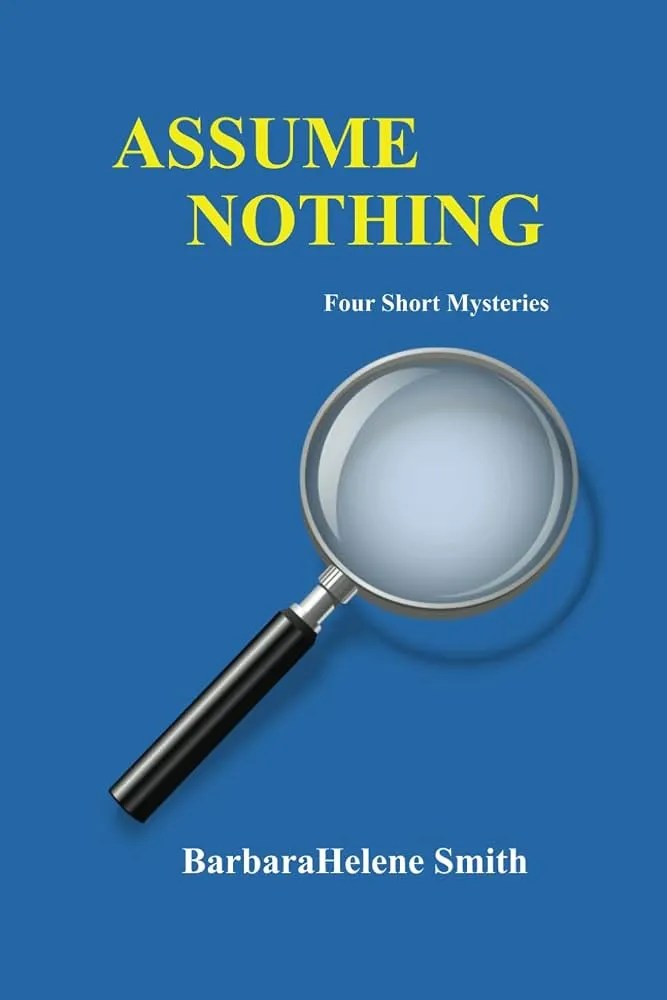
ASSUME NOTHING is a collection of short mysteries about four ordinary women, who find themselves in extraordinary situations, while looking for the truth.
Do you like short, fast-moving mysteries with a unique protagonist?
ASSUME NOTHING is a collection of short mysteries about four ordinary women, who find themselves in extraordinary situations, while looking for the truth. Each story can be read in a couple of hours while on a beach, an airplane, by the pool, next to a fire on a cold afternoon or sitting in a comfy chair with a steaming cup of coffee, tea or glass of your favorite wine.
Search for Justice – Kelly Williams hasn’t seen her eight-year-old son since her husband gained custody after their divorce three years ago. Determined to find Tommy, Kelly enrolls in a class designed to locate missing persons. There she meets Roger Ross, who offers to help, but his trust falters when Kelly reveals a secret past. Will Roger follow his instincts or the evidence that never lies?
Vanished – If Holly Hall had a life most women would envy, why did she leave her husband? When Bill discovers Holly and half the money in their joint account are missing, he hires a private investigator to find her. The pursuing cat and mouse game reveals both Holly and Bill have been living different lives.
Family Matters – Lucinda Lawrence inherits a fortune from a total stranger. While attempting to uncover her benefactor’s identity, half-siblings begin to surface and then are mysteriously murdered. The evidence mounts against Lucinda, making her the prime suspect.
Fakes, Frauds and Forgeries – When Paige Jenkins learns her grandmother’s Santini portrait is a forgery, she initiates her own search to discover the truth. After identifying two more fake paintings, she contacts Byron Cruise, an insurance investigator, whose company insured the paintings. In her quest for answers, Paige repeatedly finds herself in the wrong place at the wrong time, and unwittingly becomes involved in robbery, kidnapping and murder.
Excerpt from Search for Justice:
Kelly drove to Tommy’s school and stared at the empty playground, not sure what to do. I could go into the building, identify myself as Tommy’s mother and take him home with me. But that would be kidnapping. Mom always said, ‘Two wrongs don’t make a right’. Besides, Tommy thinks I’m dead. It would be a shock to suddenly appeared.
She waited across the street and watched as different groups of children came out to play in the yard. When she spotted Tommy’s blue-and-white striped shirt, she left the car and hid behind a palm tree. Her heart ached. She wanted to climb the fence and hug him, but resisted the urge. I found him, she thought jubilantly. I know where he is. He’s safe and happy.
She walked to the car after Tommy’s class went inside the school. A sudden wave of panic flowed over her. Maybe I shouldn’t leave.What if Buddy takes Tommy away again?
Assume Nothing by BarbaraHelene Smith is available as an e-book and paperback at Amazon.com.
Any public group depends on volunteers to keep the organization active and worth attending. In a non-profit like LCRW, the officers, coffee maker, room set-up crew, and providers of edible goodies are all volunteers, and we are proud of them. Oftentimes, the monthly educational presenter is a group member and thus, also, a volunteer. We firmly believe in “authors helping authors.”
If you are a regular visitor to the LCRW website, you may have noticed the presentation titles and presenter names have been jumping around on our calendar. That’s a side effect of depending on volunteers. Life happens, as we say, and people need to juggle responsibilities. It’s all right. We do what’s necessary to keep the calendar full and the information flowing. By leaving all the monthly listings up, anyone can see what types of subjects we cover.
On Saturday, June 27, the presentation will be given by New York Times Best Seller Kathryn Shay. She will explain HOW to add conflict to your story. I, for one, need this class. I can write a good soap opera-type scene, but adding a separate conflict that the character has to overcome or solve and that keeps the reader turning the pages is one of my weaknesses. (So are long, wordy sentences.)
If you know Kathryn Shay as a romance writer, you are fortunate. May I also recommend her book, The Perfect Family. It’s an in-depth look at what happens to a family and its circle when one of the children comes out as gay. Until I read this warm, natural account, I did not understand the ripple effect.
And this blog post is also a grand example of how easy it is for a writer to change topics mid-essay. I think I need a class on how not to do that! The culmination remains: LCRW has many different levels of writers and wonderful volunteers that make our group worth belonging to.
Come visit us. Your first time attending is always free, and our dues are only $20.00 a year. Did you notice how I just changed topics again? It’s all right in this type of writing.
When my husband finally retired at age 76, we discovered music cruises. The Star Vista group charters Holland America ships and holds seven-day music parties at sea. There are eight different genres of music. In January 2026, we enjoyed our second New Orleans Jazz and Blues cruise, called The Big Easy Cruise. Live music on several different stages at the same time from noon until 1:00 AM. We boarded the ship in Ft. Lauderdale, Florida after flying from Rochester, New York. During the week, there was a 24-hour stop in New Orleans and later a 12-hour stop in Cozumel, Mexico, before returning to Lauderdale. Of course, we had to fly back to Rochester.
While in New Orleans, my husband and I were exploring the French Market near Jackson Square when we saw our Rochester friends who were also on the cruise, so we called out to them by name. We realized that it wasn’t often that one could do that in another city.
In Cozumel, we went on a submarine excursion. It was a small, white submarine that held about fifty people with windows lining each side. We did have to enter it by climbing down the ladder through the hatch on the top while it bobbed in the ocean. There are only a handful of these subs in the world. After being amazed by the underwater trip, we were back on land in Cozumel in search of an authentic Mexican restaurant. What we get in our home locale is too Americanized. Walking through the shopping center, we heard our last name called from afar. How often does that happen in a foreign country? It turned out to be the parents of Michael Christie, who plays trumpet in our favorite NOLA band led by John “Papa” Gros. Harold and Pam gave us a good recommendation.
At the end of cruise week, we arrived back in Fort Lauderdale to find the East Coast had been blasted with a snowstorm two days prior, so the airports were in chaos. American Airlines emailed us suggesting we stay an extra day in Florida. We did that on our own nickel, then decided we wouldn’t stay a second day even though they offered us cash; it wasn’t enough to cover the cost of another hotel night. We made it out of Lauderdale and landed on time in Charlotte, North Carolina, where the runways still had small but noticeable snow banks along the edges. Then the “fun” began. Delay after delay after delay, then a cancellation and rebooking. Five hours later than scheduled, we had a gate change. Ugh! At the new gate, we wondered what was to come next and heard our first names, Bob and Sue, called from within the waiting area. Turns out it was a musician friend, Jim, who had been to Vegas and was also trying to get back to Rochester, New York.
So I’m standing, talking to Jim, telling him about being called by name in the most unusual settings, when the gentleman at the podium announces he would like to talk to one of the Spitulniks. I probably gasped out loud, and my husband and I looked at each other, ready to explode if we were told we wouldn’t be getting on this particular airplane. I went to the podium, and the attendant said, so only I could hear, “I have two seats open in first class, but they’re not together. Would you and your husband like them?” Well, of course we would. Why not? At that point we felt like we deserved them, but so did everyone else. We did learn later they were offered to us because of our American Airlines credit card status. We thoroughly enjoyed feeling like the elite.
It was quite the trip, and you are probably wondering why this was posted on a writing group’s blog page. Well, you just read a memoir essay. It wasn’t full of dark family secrets, trauma, or bad news. I hope you found it interesting, and the lesson is that memoir does not have to be self-introspection. It can be a good experience that is fun to share with others.
Note: we’re booked on The Big Easy again in January 2027. starvistalive.com
Kimberly Gore is a multi-genre author whose imagination thrives on curiosity, compassion, a dash of mischief. Her young adult novel Seven Little Secrets won first place in the 2018 Next Generation Indie Book Awards, while Knucklebone captured top honors in two national competitions judged by author Cynthea Liu, literary agent Jennifer Jaeger, and the Write On Con/Reading Room Aspiring Writer’s Competition. She also penned Save Me a Song and the middle-grade adventures The Miss-Adventures of Amy and Tracy and The Wish Problem series and she’s written several “how-to” guides. Beyond the page, Gore co-wrote a screenplay optioned by Minor Distractions Entertainment, created and produced IMPRINT Journal, a local literary magazine, and has spent two decades coordinating Rochester’s largest writer’s group, hosted by Barnes & Noble in Greece, NY. A seasoned instructor and conference speaker, she’s taught creative writing for community education programs and presented on the craft of storytelling at Astronomicon, Lilac City Rochester Writers, and RIT’s StoryCon.
Sue Sevard Brockport, NY Memoirist
The idea of filling each day as a writer had never before crossed my mind until the death of my husband, Jim, in 2010. For a reason I have never understood myself, I decided to write the story of our meeting, marriage, life, and love as a gift to our children. This project took me three years to complete and 4 writing classes at RIT and 3 at Brockport State, plus multiple memberships in writing groups. When I finally completed the book and published Autumn Leaves, I felt I had given my best and left a legacy for my four children. I never expected the book to be enjoyed by friends, relatives, and readers across the United States. By the time that book was completed, I was hooked on the writer’s bug. What can I write now? As the director of the Brockport Museum & Library of Local History, I found a new mission – writing stories about Brockport’s heroes. That idea started me on a new and interesting hobby which I shared with fascinating people from Brockport’s past.
So, you’ve written something and you’re just not sure if it’s good as it could be. You really need someone to look it over, but, (Oh no!) I couldn’t possibly have one of my friends see it. They would probably just tell me how much they like it and that wouldn’t help. Who knows what they might think? They might even tell one of their friends how dumb I am.
Welcome to the LCRW Critique session. Three times each year, members have a chance to turn 2500 words of their manuscript over to six or seven other members who will read what you gave them and offer an objective review of your words. And you will do the same for them. Several important points guide each reviewer in the process. For example:
Reviewer should comment on the content, not the person who wrote it.
Remember, this is their story. Don’t try to make it yours.
Take it from me, this is an excellent way to learn from the valuable insight of the LCRW membership and their sensitivity to your hard work. One fine day, I heard about this critiquing process and submitted one of my short essays that was about people, the Adirondacks, kayaking, and the great outdoors. Returned to me a few days later were about a half dozen or so reviews offering wonderful feedback about my written words and some great ideas to consider to improve the piece.
Not everyone will see what you write the way you see it. Some may give advice you decide not to follow. After all, it was you who wrote it in the first place. But, when three or four members make the same suggestion, THAT is worth hearing. You would be smart to make the suggested changes.
This may be the opportunity that you’ve been looking for.
One review session is offered to any author without becoming a group member. Try it. You might like it. Our next critique is July 18, 2026. Please contact us via the contact page on this site to get rules and dates for the July submissions.
Our regular monthly meeting is Saturday, April 25. The business meeting will begin at 9:00 AM, or when Sue tells everyone to be quiet…
If you are thinking of visitng our group for the first time, the business meeting is worth attending because we do what is called the “round table.” After the formalities that every club needs to attend to, we go around the table, and each member gives an update on their writing accomplishments since the last time we met. It’s a great time to learn the members’ names, hear about the varied projects, and get to know everyone.
The presentation usually starts around 10:15. This month, we have member Kat Doran, who is an editor at Wild Rose Press, giving a talk about marketing your book(s). The title of the talk is “Marketing for Dummies.” No, that is not an insult; it’s a piggyback on the line of books available at your local library or bookstore, with many how-to books written in plain language for beginners or those inexperienced in a certain field.
There is always time to ask the speaker questions or seek clarification of a point if needed. Our meetings are laid-back, informative, and friendly.
Light refreshments are available, as well as coffee and tea. The meeting location and other details are available on the home page of this website. We’re happy you found us. And in case you are wondering, the dues to belong are only $20.00 a year.
What is LCRW, you may be asking? It’s the acronym for Lilac City Rochester Writers.
Have you visited our author page and gotten acquainted with our members? Here’s a glimpse.
Do you like to read romance novels written by a New York Times best-selling author? Kathryn Shay is one of our members, and she also gives presentations to our group on the craft of writing. It’s a privilege to learn from her.
BarbaraHelene Smith spent her career as an FDA inspector. She has published twelve books about the different types of investigations the FDA handles. The Connie Murphy Mystery series is exciting, and it teaches at the same time.
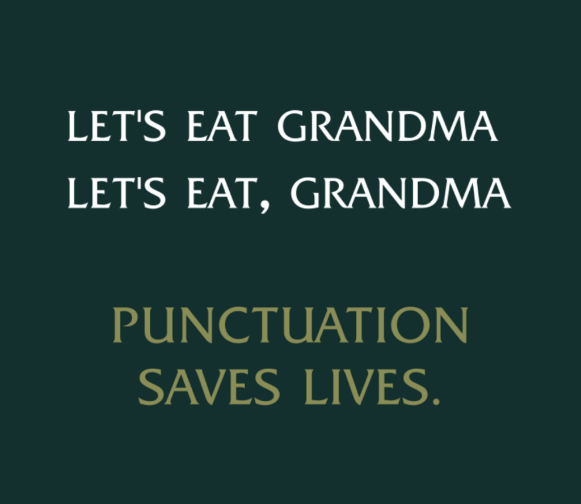
Rick Taubold writes in varied genres and hosts an online magazine: Fabula Argentia. We think his best book is Punctuation for Fiction Writers. In it, he explains and gives examples of how to use correct punctuation for dialogue, which is different from that used for regular prose.
Rick Iekel also writes in varied genres. He wrote the book The Roc – Journey through the 20th century. It’s the history of Rochester, New York’s airport. He was the best person to write it as he worked at the airport for 30-plus years.
Donna Collins’ name will pop up in your magazines where her recipes and articles about country life appear.
John Caligiuri is our resident science fiction and alternative history author. He mentions local places (near Rochester) in his stories. It makes one feel more involved in the action when they recognize the locale.
Kim Gore teaches writing classes, hosts a writing group, and has multiple books out in different genres, both fiction and non-fiction. She is also a regular presenter in our group and publishes an annual Halloween anthology. She’s our “firecracker.”
This is only a synopsis of the authors you would have the privilege of spending time with if you attend LCRW. Click over to our authors tab to read more about each one, and others not mentioned here. We love visitors at our meetings and always welcome new members who we can help advance in their writing journey.
As a long-time workshop leader, I’m in awe of how some writers are masters at putting themselves on a path of creative self-destruction. In a way, it’s a beautiful, albeit demented, thing to behold—sort of like watching Glen Powell wrangling that F-5 tornado in Twisters. As a writer myself, I watch them and think, Wow. And I thought I was good at making myself miserable and getting in my own way.
What is it that makes these master self-saboteurs so good at what they do?
The question got me thinking about Stephen R. Covey’s book The Seven Habits of Highly Effective People: Powerful Lessons in Personal Change. The book has sold over 40 million copies and is still transforming the lives of everyone from presidents to parents. After revisiting that book, it occurred to me that highly effective people and highly ineffective writers have a lot in common. Indeed, I’d say they both share the same seven habits, except the latter applies all that initiative in the wrong direction.
What follows are examples of how highly ineffective writers manage to twist Covey’s seven habits for positive change into powerful lessons on personal sabotage.
Habit 1: Be proactive.
In his book, Covey writes that highly effective people take responsibility for their choices. They don’t just sit around waiting for whatever befalls them. They make it a habit to act rather than react.
The same goes for highly ineffective writers. Master self-saboteurs preempt any potential criticism of their work by being the first to trash talk it. They don’t succumb to outsiders trying to influence or support them with feedback, instruction, brutal honesty, or praise. When it comes to personal sabotage, highly ineffective writers always make the first move, pooh poohing all routes to a more productive and positive writing life.
Habit 2: Begin with the end in mind.
Imagine you are at your own funeral. What are people saying about you at your service? Covey says highly effective people decide how they want to be remembered—from their achievements to the values that guided their success. They then use those insights as the foundation for living a principle-centered life that helps them focus and flourish.
Highly ineffective writers also begin with the end in mind. Often, before they have even started their novels or memoirs, they fast forward to how all their efforts will likely play out:
Their book never sells because, let’s face it, unless you’re a celebrity or know someone, it’s next to impossible to land an agent or publisher, plus no one reads anymore anyway.
Or, miracle of miracles, their book does get published, but then they’ll be expected to (ugh!) promote it, and the idea of having to hawk their work feels exhausting, nerve-wracking, and, frankly, beneath them. Indeed, just the thought of marketing their book makes them not even want to write it.
Reviews! What’s the point of dedicating so much time and effort into publishing a book, just so a bunch of snobby critics and haters on Goodreads can trash their efforts for no good reason.
Or, equally dismal, their book is a smashing success, which means they’ll be under relentless pressure to replicate that success. The highly ineffective writer takes a moment to imagine their own funeral. “I can’t think of anything more pathetic,” says one of the small handful of mourners in attendance, “than an author who turned out to be nothing more than a one-hit wonder.”
Habit 3: Put first things first.
Highly effective people act. Every day, they manage their time and make choices in a way that feeds their personal and professional life. They say “no” to the things that don’t match their principles and goals, and they prioritize the things that provide meaning and balance in the here and now.
Highly ineffective writers also make choices every day about where they spend their time and energy. First things first, they choose to start their days by texting all their writing friends to see if anyone else got up early to write. Then they check out a bunch of Instagram reels and go down that rabbit hole of celebrity StarTracks until finally, after they’ve finished clicking through a slideshow of fifty unforgettable looks at the Venice Film Festival, they are ready to work on that new chapter…except now it’s time to go to their day job.
And so goes another morning, another week, another weekend. For the highly ineffective writer, every day is a race against the clock to say “yes” to as many things as possible—social media, rearranging the photos on the mantle, volunteering wherever they are needed. The highly ineffective writer is a master of prioritizing anything that is not writing.
Habit 4: Think win-win.
Forget about winners and losers. Highly effective people see life as a cooperative, not a competition. When interacting with others, their goal is to seek a mutually beneficial agreement or solution—a win-win where both parties feel satisfied with the outcome.
Highly ineffective writers go a step further with this mindset. They think in terms of win-win-win, which means when they sit down to write, they hope to satisfy three parties. Naturally, they want to fulfill their own creative goals; for example, to write a memoir about their childhood growing up on a small farm in Iowa. But they also want to make sure the people who appear in their story are happy, including their five sisters who read an early draft of their manuscript and all agreed, “That’s not how it really happened!” And lastly, they feel the need to accommodate the members of their writing group, one of whom offered this feedback: “No one is going to want to read about someone’s boring childhood on a smelly family farm in the middle of nowhere.”
With this kind of win-win-win philosophy, the highly ineffective writer sets out to revise in a way that will provide a satisfactory outcome for, well, for pretty much everyone they know.
Habit 5: Seek first to understand and then to be understood.
Listening. It’s a tricky skill because lots of people, even if they do allow room for others to talk, only listen enough to figure out what they want to say in return. Whereas a highly effective person makes it a habit to actively and empathetically listen before communicating their own views. They listen with the intent to understand.
Similarly, the highly ineffective writer understands exactly what someone is saying, mostly because they actively put words in the other person’s mouth.
What is said: “I think the opening of your story would benefit from some trimming.” What is understood: “Burn your entire manuscript.”
Said: “Your novel was a delight.” Understood: “I’m just being nice so you’ll leave me alone.”
Said: “Thank you for your powerful submission. Unfortunately, your novel is not a good fit for our press.” Understood: “We hated your novel and we hate you, too.”
Habit 6: Synergize.
The synergize habit is like habit 4 (Think win-win)—only on steroids. Highly effective people look for opportunities in all aspects of their life to unleash the power of collaboration; to create outcomes greater than the sum of their parts.
Given that writing, for the most part, is a solitary act, how does the highly ineffective writer practice a habit that involves teamwork, unity, and the type of math where one plus one equals three? The answer lies deep in their psyche.
Residing within the mind of the master self-saboteur is a quartet of collaborators—the creator, the editor, the critic, and the stan. Every time the highly ineffective writer sits down to write, these other team members unleash a torrent of opinions:
“Generate! Generate! Generate!” the creator insists.
“I don’t care if you’ve only written a few paragraphs,” the editor interrupts, “those passive verbs aren’t going to rewrite themselves!”
Meanwhile, the critic at this mental gathering doesn’t say a word because the musk of his disdain already communicates volumes. And the stan, bless his little heart, keeps piping in, “Your writing is perfect. Don’t change a thing!”
“Synergize! Synergize! Synergize!” the highly ineffective writer intones, while rocking back and forth, squeezing their head. But how can they make the whole greater than the sum of its parts when nothing they write ever seems to add up to anything?
Habit 7: Sharpen the saw.
We can all lose our edge from time to time, which is why highly effective people follow a balanced program of self-renewal in four areas of life: physical, social/emotional, mental, and spiritual. They regularly and consistently “sharpen the saw,” so to speak, to create growth and ongoing positive change.
The highly ineffective writer also sets goals in service to self-renewal, often to extremes:
Run a marathon.
Greet every sunrise with a sense of awe.
Help save a bunch of endangered species.
And, most importantly, write, write, write! Every. Single. Day!
And therein lies the final lesson in personal sabotage. Because while highly effective people seek a balanced program of self-improvement to renew their edge, highly ineffective writers are determined to make their saws so sharp they inevitably drive themselves right over the edge.
Joni B. Cole is the author of seven books, including the recent release Party Like It’s 2044: Finding the Funny in Life and Death. She is also the author of two writing guides: Good Naked: How to Write More, Write Better, and Be Happier (listed as one of the “best books for writers” by Poets & Writers); and Toxic Feedback: Helping Writers Survive and Thrive. Joni is the founder and facilitator of the upcoming “Good Naked Weekend Write-Away” in White River Junction, Vermont, Oct. 25 -27, 2024. For more information about her teaching, her books, or how to register for the Write-Away, visit: www.jonibcole.com or www.thewriterscenterwrj.com
I want to tell you a little secret: Nobody writes a perfect first draft.
Not Shakespeare. Not Mark Twain. Not Stephen King.
Nobody. (Hemingway once said: “There are no great writers, only great re-writers.”)
Why hire an editor? Do you want your book to be the best that it can be?
Editors are useful to authors because it’s almost impossible to be objective about your own work. As the creator, writers “fill in the blanks” of what’s actually on the page versus the vision in their head.
No matter how eagle-eyed we may be, it’s easy to see on the page what we intended to say, rather than what we’ve actually said. Have you written a character named BRIAN and you keep typing BRAIN?
Even editors need editors. I can personally attest to that! My editor finds so many little things that I, as an editor, point out to my clients—repeated words, typos, misplaced commas.
Because your spell checker is not infallible. The easy answer is that even if you use a spell checker, there are a lot of bloopers it simply won’t catch because the words are actually spelled correctly. For example, one editor worked at a big national non-profit organization, and the final, critical step before any of their promotional material went out was to check, manually, that none of it contained the phrase “pubic education” where it should have said “public education.” Oops!
Here are just a few of the basic things that a competent editor can and should do to your work, for starters:
Fix grammar, punctuation, and spelling errors.
Replace passive verbs with active ones (“the gun was fired by the robber” becomes “the robber fired the gun.”)
Mend run-on sentences
Root out “wordiness” (i.e., help you get to the point more economically)
Make sure you’ve made the point(s) that you set out to make
Story flow
Character arc
What Can YOU do?
Read it aloud. Watch for:
Passive sentences Go through your writing and find instances where something happens to the subject (passive) and change them to the subject making something happen (active). For example, “This class was taught by me,” can be changed to the active, “I taught this class.”
Words that often signal passive construction: has, had, was, were and that. Example: There was a mutter from the witnesses becomes The witnesses muttered.
The way you portray thoughts.
Old:This isn’t happening, Jinx thought. New: Jinx blinked. She blinked again. It didn’t help. This isn’t happening. (Action signifies who is thinking. Don’t need the tagline thought.)
Dialog tags. Fewer “saids.” Whenever possible, use an action or a reaction. It’s stronger, helps develop character, emotion, and moves the story forward.
Omit Useless Words:
That (there is no doubt that… becomes:…no doubt…)
very really truly absolutely totally suddenly
starting to began to as even just there
SHOW don’t TELL Without context, words like “beautiful/ugly” and “delicious/disgusting” are meaningless. We’ve all seen the word amazing a thousand times. Try astonishing, astounding, blindsiding, dumbfounding, eye-opening, flabbergasting, or use description to show what it looks like/how it feels. The more common the word, the more readers will overlook it—and your writing. Keep a thesaurus handy and switch out pedestrian words (sad, glad, happy, excited). Can you SHOW it through the character’s reactions/feelings?
Simplify your sentences wherever possible. Watch for redundant or unnecessary phrases. As writers, we need to “show, not tell” as often as possible. Yet, some writers tend to show and then tell the same information, which is redundant. Watch out for this in your manuscripts. Also, look for the redundant phrases below and others like them. Stand up = stand Sit down = sit Turned around = turned He thought to himself = He thought (or eliminated altogether by using an action) She shrugged her shoulders = she shrugged She whispered softly = she whispered He nodded his head = he nodded
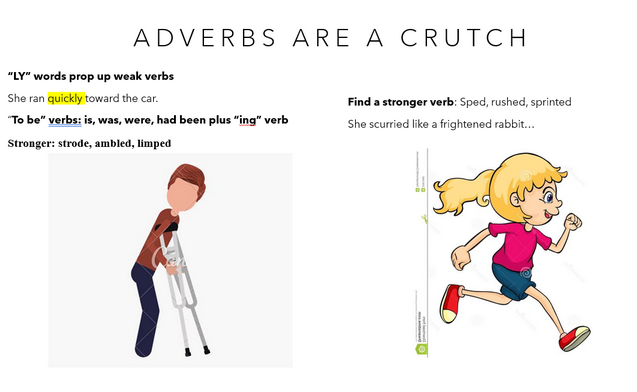
Avoid adverbs for the most part. They’re a crutch to prop up weak verbs. Use strong, descriptive verbs instead.
Example: She smiled slightly at the photographer. Better: She grinned at the photographer. OR She quirked her mouth upward… OR She gave the photographer a shy smile. Avoid repeating words. Go back and reread each sentence. Have you used the same word several times within a single sentence or paragraph or on the page? If so, substitute another word with the same meaning. Limit the description in a dialogue tag. Beginning writers tend to load down the dialogue tags (the “he said, she said” part of the dialogue) with too many details. If you must describe what a character is doing AS he says something, put that information in a separate sentence, not in the dialogue tag. (example: …she said as she backed out of the room becomes: She backed out of the room). No tagline. Keep it short. Be careful when trying to avoid too many “saids”—you can’t laugh, smile, spit, snarl, or grouse words.
Revision & Polish Tips: 1. Keep the focus, the theme, of the piece consistent throughout. 2. Sentence structure: a subject—a noun or pronoun, and a predicate/verb that explains what the subject is doing. 3. Use nouns rather than adjectives and remove overused adjectives such as very. 4. Verbs are where the action is—choose strong ones. 5. Avoid adverbs that diminish the strength of a sentence. 6. Vary sentence length and rhythm within the piece. 7. Make it personal and professional, convey the message, be specific. Then, when you have polished your manuscript to the best of your ability, send it to a professional editor, even if you plan to submit to a publisher. You won’t be sorry.
…is a freelance editor and WILLA and Will Rogers Medallion-award winning author of 12 books.
She grew up on a working ranch in eastern Montana, riding and gathering cattle for branding and shipping. Her parents taught her a love of books, and her grandmother rode bucking stock in rodeos. She followed her dream of writing, with a journalism degree from the University of Montana.