From an early age of seven and for the rest of her life, my mother penned fascinating lyric verses. Complete with a second stamped self-addressed envelope, she submitted her efforts for publication in a variety of magazines. Like so many others, she routinely offered these creations in hope of acceptance.
No sooner had the postal delivery man pulled away from the mailbox than Helen would climb the steps to the roadside mailbox. There might be a response from one of the publications. The presence of one or more thick, familiar-looking envelopes spelled disappointment.
Over the weeks and months, the receipt of so many rejections was taking its toll. Never one to be conquered by the process, Helen devised a plan. During Helen’s next trip to town ( She lived in the country), she looked for the perfect object and happily came home with a silver platter with a glass-covered bottom. She cleaned it up and went to work on her project.
From dozens and dozens of rejection letters, she cut phrases into small strips: “Sorry. Have a quota.”, “Not this time”. ”Too serious for us.”, etc. She spread these strips this way and that, some on an angle, some upside-down, filling the entire bottom of the platter with expressions – all saying, “NO !”. Gluing these to the bottom, she replaced the glass and held her trophy up high.
Hosting the next meeting of the village Poetry Society, Helen served refreshments on her new party tray to the delight and compliments of fellow poets.
What is worse than receiving a reject letter? Not getting a response at all. Was your submission received? Was it read or is it buried with other entries in some junior editor’s inbox, and never to see daylight again? A good rejection will tell you why the publisher didn’t accept your story and may give some insight into how to improve it so you can submit it elsewhere. If you’ve been rejected, you are not alone. Many famous authors received rejection letters before their book got to the right publisher.
Here are some examples: A Time to Kill – John Grisham – 12 publishers and 16 agents rejected the book Carrie – Stephen King – 30 rejections Chicken Soup for the Soul – John Canfield & Mark Victor Hansen – 144 rejections Gone with the Wind – Margaret Mitchell – 38 rejections Harry Potter/The Sorcerer’s Stone – J.K Rowlings – 12 rejections Jonathan Livingston Seagull – Richard Bach – 18 rejections Lord of the Flies – William Golding – 20 rejections The Diary of a Young Girl – Anne Frank – 15 rejections The Help – Kathryn Stockett – 60 rejections The Tale of Peter Rabbit – Beatrix Potter – 6 rejections
If you believe in your story, don’t give up. Stick with it and keep improving your craft. Lilac City Rochester Writers welcome all levels of experience and our aim is to make you a better writer.
BarbaraHelene Smith, Author Uprooting the Family Tree The Connie Murphy Mysteries Assume Nothing
I’m a big fan of staying in my comfort zone. Who doesn’t want to be comfortable? I’ll watch a documentary of climbing Mt. Everest from the safety of my living room. While that’s an extreme example, sharing your writing for the first time feels just as terrifying to a new writer. Always cautious, I didn’t leap out of my comfort zone when it came to writing. I took it one step at a time. If you’re a cautious writer too, this could be the right approach for you also.
Step 1: See if you really want to do this writing thing
I always liked creative writing, but after college, I only wrote short pieces as models for my students. It always reminded me that I enjoyed writing, and I’d think I should write more, then never got around to it. Then, I read a collection of Beauty and the Beast retellings that were part of the Rooglewood Fairy Tale contest. At the end of the book, there was an advertisement for another contest with Snow White retellings. For some reason, that spoke to a part of me that always wondered if I could be a writer. I wanted to see if I could do it. I’d never written anything of that length (novella). I didn’t tell anyone, just wrote my story and sent off the submission. I got an honorable mention. The honorable mention was a good ego boost. But the most important thing was that I found out that not only did I have potential as a writer, but I enjoyed it.
Step 2: Start telling people
I didn’t shout my honorable mention from the rooftops, but I did tell the people closest to me. Telling just a few people holds you accountable, because they’ll ask about your writing. More importantly, for me, my mother noticed a sign at Barnes & Noble advertising a writing group. That was a much bigger step. Sitting in person and writing to a prompt on the spot eliminates the anonymity that comes with sending a story off to a judge who is a stranger. It took me a while to feel comfortable sharing, but once other people know, it makes the idea of seeing yourself as an aspiring writer easier.
Step 3: Go into lockdown
Turns out, being confined to home provides lots of writing time. When the world went into lockdown, I turned that novella into a novel. I read articles and watched videos about writing craft. I wrote the rough draft of a middle-grade novel. Most importantly, because of the Barnes & Noble group, I was on Steve Yates’s email list and found out about LCRW’s critiques. Again, the pandemic made this easier because we were meeting over zoom, which is less intimidating than meeting in person. To be clear, I’m not encouraging anyone to release a virus so there is another shut-down. But, it is important to make time for your writing. Find a time you can devote to writing. Make writing part of your life.
Step 4: Find your people
That LCRW critique led me to join the group. That introduced me to Sally Valentine, which led me to another children’s writing group. I also started participating in Writing Battle competitions online. It turns out writers are really a supportive group of people. Having people who have the same passion and who will support you makes all the difference. So, after you force yourself out of that comfort zone, you’ll find a whole new group of people who will help make the journey more comfortable.
Our new member, Jess Bates, will be presenting a hands-on introduction to Canva during the Saturday, August 22 meeting. Canva calls itself a Visual Site for Everyone. It is a free online graphic design tool. You can create book covers, social media posts, presentations, business cards, videos, logos, and much more with just a few clicks. I can hear the denial comments some of you just thought. Come to the LCRW meeting and let Jess show you how easy it is to use. She will also talk about setting up your personal Instagram page and explain how useful it can be for an author. Please bring your laptop or iPad so you can “play” along during the presentation.
Directions to the Lilac City Rochester Writers meeting and times are on the home page of this easy-to-navigate website. Everyone is welcome to a one-time free visit to the group that SHOWS you how to become a better writer.
Any public group depends on volunteers to keep the organization active and worth attending. In a non-profit like LCRW, the officers, coffee maker, room set-up crew, and providers of edible goodies are all volunteers, and we are proud of them. Oftentimes, the monthly educational presenter is a group member and thus, also, a volunteer. We firmly believe in “authors helping authors.”
If you are a regular visitor to the LCRW website, you may have noticed the presentation titles and presenter names have been jumping around on our calendar. That’s a side effect of depending on volunteers. Life happens, as we say, and people need to juggle responsibilities. It’s all right. We do what’s necessary to keep the calendar full and the information flowing. By leaving all the monthly listings up, anyone can see what types of subjects we cover.
On Saturday, June 27, the presentation will be given by New York Times Best Seller Kathryn Shay. She will explain HOW to add conflict to your story. I, for one, need this class. I can write a good soap opera-type scene, but adding a separate conflict that the character has to overcome or solve and that keeps the reader turning the pages is one of my weaknesses. (So are long, wordy sentences.)
If you know Kathryn Shay as a romance writer, you are fortunate. May I also recommend her book, The Perfect Family. It’s an in-depth look at what happens to a family and its circle when one of the children comes out as gay. Until I read this warm, natural account, I did not understand the ripple effect.
And this blog post is also a grand example of how easy it is for a writer to change topics mid-essay. I think I need a class on how not to do that! The culmination remains: LCRW has many different levels of writers and wonderful volunteers that make our group worth belonging to.
Come visit us. Your first time attending is always free, and our dues are only $20.00 a year. Did you notice how I just changed topics again? It’s all right in this type of writing.
When my husband finally retired at age 76, we discovered music cruises. The Star Vista group charters Holland America ships and holds seven-day music parties at sea. There are eight different genres of music. In January 2026, we enjoyed our second New Orleans Jazz and Blues cruise, called The Big Easy Cruise. Live music on several different stages at the same time from noon until 1:00 AM. We boarded the ship in Ft. Lauderdale, Florida after flying from Rochester, New York. During the week, there was a 24-hour stop in New Orleans and later a 12-hour stop in Cozumel, Mexico, before returning to Lauderdale. Of course, we had to fly back to Rochester.
While in New Orleans, my husband and I were exploring the French Market near Jackson Square when we saw our Rochester friends who were also on the cruise, so we called out to them by name. We realized that it wasn’t often that one could do that in another city.
In Cozumel, we went on a submarine excursion. It was a small, white submarine that held about fifty people with windows lining each side. We did have to enter it by climbing down the ladder through the hatch on the top while it bobbed in the ocean. There are only a handful of these subs in the world. After being amazed by the underwater trip, we were back on land in Cozumel in search of an authentic Mexican restaurant. What we get in our home locale is too Americanized. Walking through the shopping center, we heard our last name called from afar. How often does that happen in a foreign country? It turned out to be the parents of Michael Christie, who plays trumpet in our favorite NOLA band led by John “Papa” Gros. Harold and Pam gave us a good recommendation.
At the end of cruise week, we arrived back in Fort Lauderdale to find the East Coast had been blasted with a snowstorm two days prior, so the airports were in chaos. American Airlines emailed us suggesting we stay an extra day in Florida. We did that on our own nickel, then decided we wouldn’t stay a second day even though they offered us cash; it wasn’t enough to cover the cost of another hotel night. We made it out of Lauderdale and landed on time in Charlotte, North Carolina, where the runways still had small but noticeable snow banks along the edges. Then the “fun” began. Delay after delay after delay, then a cancellation and rebooking. Five hours later than scheduled, we had a gate change. Ugh! At the new gate, we wondered what was to come next and heard our first names, Bob and Sue, called from within the waiting area. Turns out it was a musician friend, Jim, who had been to Vegas and was also trying to get back to Rochester, New York.
So I’m standing, talking to Jim, telling him about being called by name in the most unusual settings, when the gentleman at the podium announces he would like to talk to one of the Spitulniks. I probably gasped out loud, and my husband and I looked at each other, ready to explode if we were told we wouldn’t be getting on this particular airplane. I went to the podium, and the attendant said, so only I could hear, “I have two seats open in first class, but they’re not together. Would you and your husband like them?” Well, of course we would. Why not? At that point we felt like we deserved them, but so did everyone else. We did learn later they were offered to us because of our American Airlines credit card status. We thoroughly enjoyed feeling like the elite.
It was quite the trip, and you are probably wondering why this was posted on a writing group’s blog page. Well, you just read a memoir essay. It wasn’t full of dark family secrets, trauma, or bad news. I hope you found it interesting, and the lesson is that memoir does not have to be self-introspection. It can be a good experience that is fun to share with others.
Note: we’re booked on The Big Easy again in January 2027. starvistalive.com
As a long-time workshop leader, I’m in awe of how some writers are masters at putting themselves on a path of creative self-destruction. In a way, it’s a beautiful, albeit demented, thing to behold—sort of like watching Glen Powell wrangling that F-5 tornado in Twisters. As a writer myself, I watch them and think, Wow. And I thought I was good at making myself miserable and getting in my own way.
What is it that makes these master self-saboteurs so good at what they do?
The question got me thinking about Stephen R. Covey’s book The Seven Habits of Highly Effective People: Powerful Lessons in Personal Change. The book has sold over 40 million copies and is still transforming the lives of everyone from presidents to parents. After revisiting that book, it occurred to me that highly effective people and highly ineffective writers have a lot in common. Indeed, I’d say they both share the same seven habits, except the latter applies all that initiative in the wrong direction.
What follows are examples of how highly ineffective writers manage to twist Covey’s seven habits for positive change into powerful lessons on personal sabotage.
Habit 1: Be proactive.
In his book, Covey writes that highly effective people take responsibility for their choices. They don’t just sit around waiting for whatever befalls them. They make it a habit to act rather than react.
The same goes for highly ineffective writers. Master self-saboteurs preempt any potential criticism of their work by being the first to trash talk it. They don’t succumb to outsiders trying to influence or support them with feedback, instruction, brutal honesty, or praise. When it comes to personal sabotage, highly ineffective writers always make the first move, pooh poohing all routes to a more productive and positive writing life.
Habit 2: Begin with the end in mind.
Imagine you are at your own funeral. What are people saying about you at your service? Covey says highly effective people decide how they want to be remembered—from their achievements to the values that guided their success. They then use those insights as the foundation for living a principle-centered life that helps them focus and flourish.
Highly ineffective writers also begin with the end in mind. Often, before they have even started their novels or memoirs, they fast forward to how all their efforts will likely play out:
Their book never sells because, let’s face it, unless you’re a celebrity or know someone, it’s next to impossible to land an agent or publisher, plus no one reads anymore anyway.
Or, miracle of miracles, their book does get published, but then they’ll be expected to (ugh!) promote it, and the idea of having to hawk their work feels exhausting, nerve-wracking, and, frankly, beneath them. Indeed, just the thought of marketing their book makes them not even want to write it.
Reviews! What’s the point of dedicating so much time and effort into publishing a book, just so a bunch of snobby critics and haters on Goodreads can trash their efforts for no good reason.
Or, equally dismal, their book is a smashing success, which means they’ll be under relentless pressure to replicate that success. The highly ineffective writer takes a moment to imagine their own funeral. “I can’t think of anything more pathetic,” says one of the small handful of mourners in attendance, “than an author who turned out to be nothing more than a one-hit wonder.”
Habit 3: Put first things first.
Highly effective people act. Every day, they manage their time and make choices in a way that feeds their personal and professional life. They say “no” to the things that don’t match their principles and goals, and they prioritize the things that provide meaning and balance in the here and now.
Highly ineffective writers also make choices every day about where they spend their time and energy. First things first, they choose to start their days by texting all their writing friends to see if anyone else got up early to write. Then they check out a bunch of Instagram reels and go down that rabbit hole of celebrity StarTracks until finally, after they’ve finished clicking through a slideshow of fifty unforgettable looks at the Venice Film Festival, they are ready to work on that new chapter…except now it’s time to go to their day job.
And so goes another morning, another week, another weekend. For the highly ineffective writer, every day is a race against the clock to say “yes” to as many things as possible—social media, rearranging the photos on the mantle, volunteering wherever they are needed. The highly ineffective writer is a master of prioritizing anything that is not writing.
Habit 4: Think win-win.
Forget about winners and losers. Highly effective people see life as a cooperative, not a competition. When interacting with others, their goal is to seek a mutually beneficial agreement or solution—a win-win where both parties feel satisfied with the outcome.
Highly ineffective writers go a step further with this mindset. They think in terms of win-win-win, which means when they sit down to write, they hope to satisfy three parties. Naturally, they want to fulfill their own creative goals; for example, to write a memoir about their childhood growing up on a small farm in Iowa. But they also want to make sure the people who appear in their story are happy, including their five sisters who read an early draft of their manuscript and all agreed, “That’s not how it really happened!” And lastly, they feel the need to accommodate the members of their writing group, one of whom offered this feedback: “No one is going to want to read about someone’s boring childhood on a smelly family farm in the middle of nowhere.”
With this kind of win-win-win philosophy, the highly ineffective writer sets out to revise in a way that will provide a satisfactory outcome for, well, for pretty much everyone they know.
Habit 5: Seek first to understand and then to be understood.
Listening. It’s a tricky skill because lots of people, even if they do allow room for others to talk, only listen enough to figure out what they want to say in return. Whereas a highly effective person makes it a habit to actively and empathetically listen before communicating their own views. They listen with the intent to understand.
Similarly, the highly ineffective writer understands exactly what someone is saying, mostly because they actively put words in the other person’s mouth.
What is said: “I think the opening of your story would benefit from some trimming.” What is understood: “Burn your entire manuscript.”
Said: “Your novel was a delight.” Understood: “I’m just being nice so you’ll leave me alone.”
Said: “Thank you for your powerful submission. Unfortunately, your novel is not a good fit for our press.” Understood: “We hated your novel and we hate you, too.”
Habit 6: Synergize.
The synergize habit is like habit 4 (Think win-win)—only on steroids. Highly effective people look for opportunities in all aspects of their life to unleash the power of collaboration; to create outcomes greater than the sum of their parts.
Given that writing, for the most part, is a solitary act, how does the highly ineffective writer practice a habit that involves teamwork, unity, and the type of math where one plus one equals three? The answer lies deep in their psyche.
Residing within the mind of the master self-saboteur is a quartet of collaborators—the creator, the editor, the critic, and the stan. Every time the highly ineffective writer sits down to write, these other team members unleash a torrent of opinions:
“Generate! Generate! Generate!” the creator insists.
“I don’t care if you’ve only written a few paragraphs,” the editor interrupts, “those passive verbs aren’t going to rewrite themselves!”
Meanwhile, the critic at this mental gathering doesn’t say a word because the musk of his disdain already communicates volumes. And the stan, bless his little heart, keeps piping in, “Your writing is perfect. Don’t change a thing!”
“Synergize! Synergize! Synergize!” the highly ineffective writer intones, while rocking back and forth, squeezing their head. But how can they make the whole greater than the sum of its parts when nothing they write ever seems to add up to anything?
Habit 7: Sharpen the saw.
We can all lose our edge from time to time, which is why highly effective people follow a balanced program of self-renewal in four areas of life: physical, social/emotional, mental, and spiritual. They regularly and consistently “sharpen the saw,” so to speak, to create growth and ongoing positive change.
The highly ineffective writer also sets goals in service to self-renewal, often to extremes:
Run a marathon.
Greet every sunrise with a sense of awe.
Help save a bunch of endangered species.
And, most importantly, write, write, write! Every. Single. Day!
And therein lies the final lesson in personal sabotage. Because while highly effective people seek a balanced program of self-improvement to renew their edge, highly ineffective writers are determined to make their saws so sharp they inevitably drive themselves right over the edge.
Joni B. Cole is the author of seven books, including the recent release Party Like It’s 2044: Finding the Funny in Life and Death. She is also the author of two writing guides: Good Naked: How to Write More, Write Better, and Be Happier (listed as one of the “best books for writers” by Poets & Writers); and Toxic Feedback: Helping Writers Survive and Thrive. Joni is the founder and facilitator of the upcoming “Good Naked Weekend Write-Away” in White River Junction, Vermont, Oct. 25 -27, 2024. For more information about her teaching, her books, or how to register for the Write-Away, visit: www.jonibcole.com or www.thewriterscenterwrj.com
I want to tell you a little secret: Nobody writes a perfect first draft.
Not Shakespeare. Not Mark Twain. Not Stephen King.
Nobody. (Hemingway once said: “There are no great writers, only great re-writers.”)
Why hire an editor? Do you want your book to be the best that it can be?
Editors are useful to authors because it’s almost impossible to be objective about your own work. As the creator, writers “fill in the blanks” of what’s actually on the page versus the vision in their head.
No matter how eagle-eyed we may be, it’s easy to see on the page what we intended to say, rather than what we’ve actually said. Have you written a character named BRIAN and you keep typing BRAIN?
Even editors need editors. I can personally attest to that! My editor finds so many little things that I, as an editor, point out to my clients—repeated words, typos, misplaced commas.
Because your spell checker is not infallible. The easy answer is that even if you use a spell checker, there are a lot of bloopers it simply won’t catch because the words are actually spelled correctly. For example, one editor worked at a big national non-profit organization, and the final, critical step before any of their promotional material went out was to check, manually, that none of it contained the phrase “pubic education” where it should have said “public education.” Oops!
Here are just a few of the basic things that a competent editor can and should do to your work, for starters:
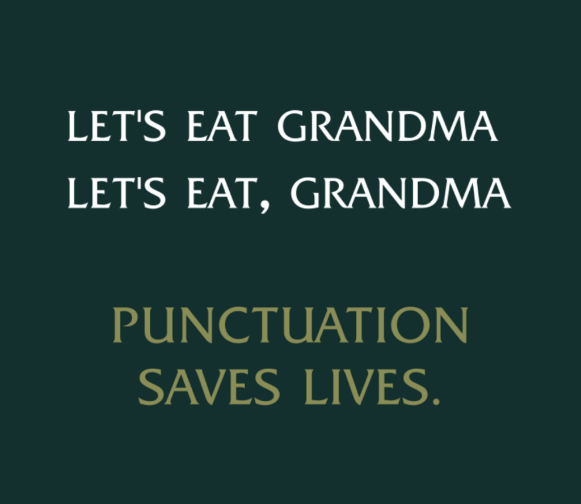
Fix grammar, punctuation, and spelling errors.
Replace passive verbs with active ones (“the gun was fired by the robber” becomes “the robber fired the gun.”)
Mend run-on sentences
Root out “wordiness” (i.e., help you get to the point more economically)
Make sure you’ve made the point(s) that you set out to make
Story flow
Character arc
What Can YOU do?
Read it aloud. Watch for:
Passive sentences Go through your writing and find instances where something happens to the subject (passive) and change them to the subject making something happen (active). For example, “This class was taught by me,” can be changed to the active, “I taught this class.”
Words that often signal passive construction: has, had, was, were and that. Example: There was a mutter from the witnesses becomes The witnesses muttered.
The way you portray thoughts.
Old:This isn’t happening, Jinx thought. New: Jinx blinked. She blinked again. It didn’t help. This isn’t happening. (Action signifies who is thinking. Don’t need the tagline thought.)
Dialog tags. Fewer “saids.” Whenever possible, use an action or a reaction. It’s stronger, helps develop character, emotion, and moves the story forward.
Omit Useless Words:
That (there is no doubt that… becomes:…no doubt…)
very really truly absolutely totally suddenly
starting to began to as even just there
SHOW don’t TELL Without context, words like “beautiful/ugly” and “delicious/disgusting” are meaningless. We’ve all seen the word amazing a thousand times. Try astonishing, astounding, blindsiding, dumbfounding, eye-opening, flabbergasting, or use description to show what it looks like/how it feels. The more common the word, the more readers will overlook it—and your writing. Keep a thesaurus handy and switch out pedestrian words (sad, glad, happy, excited). Can you SHOW it through the character’s reactions/feelings?
Simplify your sentences wherever possible. Watch for redundant or unnecessary phrases. As writers, we need to “show, not tell” as often as possible. Yet, some writers tend to show and then tell the same information, which is redundant. Watch out for this in your manuscripts. Also, look for the redundant phrases below and others like them. Stand up = stand Sit down = sit Turned around = turned He thought to himself = He thought (or eliminated altogether by using an action) She shrugged her shoulders = she shrugged She whispered softly = she whispered He nodded his head = he nodded
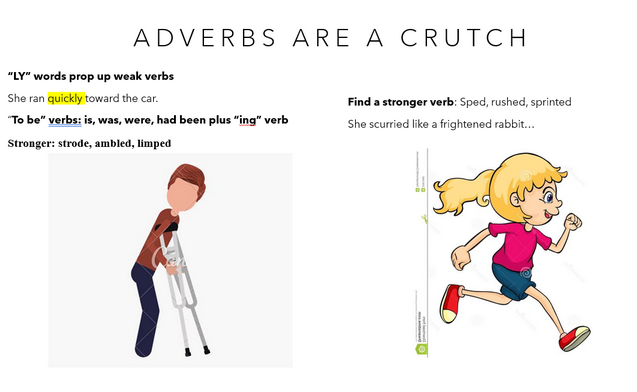
Avoid adverbs for the most part. They’re a crutch to prop up weak verbs. Use strong, descriptive verbs instead.
Example: She smiled slightly at the photographer. Better: She grinned at the photographer. OR She quirked her mouth upward… OR She gave the photographer a shy smile. Avoid repeating words. Go back and reread each sentence. Have you used the same word several times within a single sentence or paragraph or on the page? If so, substitute another word with the same meaning. Limit the description in a dialogue tag. Beginning writers tend to load down the dialogue tags (the “he said, she said” part of the dialogue) with too many details. If you must describe what a character is doing AS he says something, put that information in a separate sentence, not in the dialogue tag. (example: …she said as she backed out of the room becomes: She backed out of the room). No tagline. Keep it short. Be careful when trying to avoid too many “saids”—you can’t laugh, smile, spit, snarl, or grouse words.
Revision & Polish Tips: 1. Keep the focus, the theme, of the piece consistent throughout. 2. Sentence structure: a subject—a noun or pronoun, and a predicate/verb that explains what the subject is doing. 3. Use nouns rather than adjectives and remove overused adjectives such as very. 4. Verbs are where the action is—choose strong ones. 5. Avoid adverbs that diminish the strength of a sentence. 6. Vary sentence length and rhythm within the piece. 7. Make it personal and professional, convey the message, be specific. Then, when you have polished your manuscript to the best of your ability, send it to a professional editor, even if you plan to submit to a publisher. You won’t be sorry.
…is a freelance editor and WILLA and Will Rogers Medallion-award winning author of 12 books.
She grew up on a working ranch in eastern Montana, riding and gathering cattle for branding and shipping. Her parents taught her a love of books, and her grandmother rode bucking stock in rodeos. She followed her dream of writing, with a journalism degree from the University of Montana.
Who says history has to be boring? Why do we deny ourselves the opportunity to learn and enjoy the life and times of those who lived before us? Why, when someone offers an opportunity to open and enjoy a topic-of-old, do we instantly think about those dark days of classroom lessons and hear the teacher say, “Now, class, open up your history books to page 379 . Today we are going to talk about . . .”
In those days instant boredom would take control of our minds and bodies. Nothing good, we might think, can come from the next thirty minutes. We know, of course, that the outcome of this discussion will likely show up on one or more tests in the near and not-so-near future.
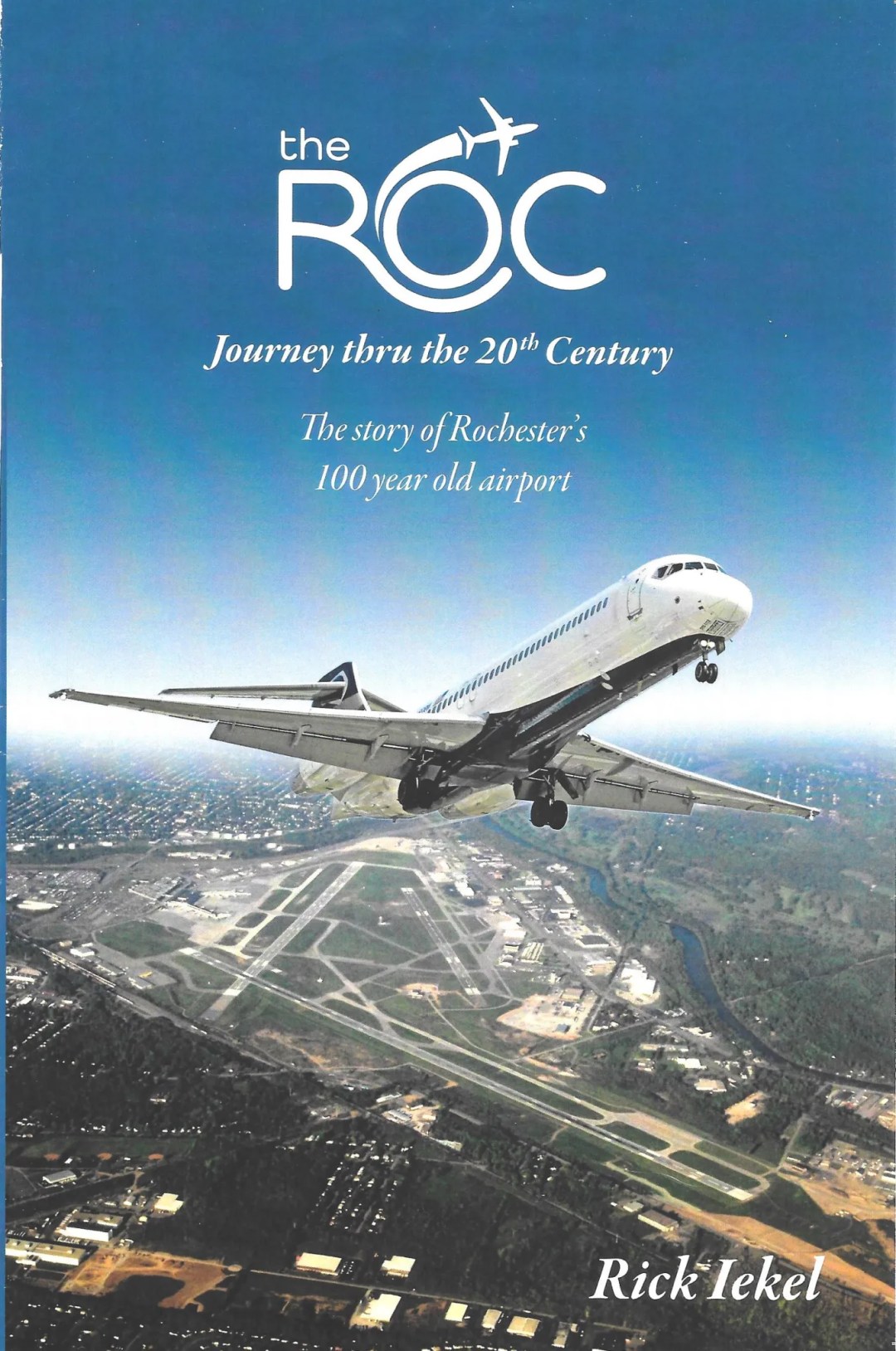
Seriously, forget the fact that it is somewhat important to have at least a semi-correct perception of what has happened in the past. I’m here to remind you that not all history is boring. Take, for example, the following excerpt describing a particular winter situation taken from my most recent book, The ROC – Journey thru the 20th Century (the only researched and compiled history of Rochester’s airport) :
* * * *
At the present time, the two, so to speak, “bookends” of a typical winter condition would read, “Bare and wet,” (…that’s good) and “Braking action nil” (…that’s bad). In the end, though, when the snow reaches 4” in depth, the runway must be closed.
The reader might find the following admission of guilt amusing as we bring the topic of snow removal to a close:
HOW BAD CAN IT GET?
It was my first significant snowfall as airport manager. The day was coming to an end. Runways were open and clean-up underway. I headed home.
After dinner I decided to drive back to the airport to watch the progress. I pulled on the tarmac and drove the length of the west wing of the terminal. The surface was cleared, awaiting aircraft that would remain overnight. A long row of mounded snow paralleled the building near the outer edge of the pavement.
The mound was a barricade for my access to the airfield. With no opening available and my unwillingness to drive back to the far end, I sized up the mound and estimated that I could break through. In my Ford sedan, I took aim and stepped on the gas. When I hit the snow, the car went airborne, flying forward several feet before landing on the mound. As the car settled, I noted with some dismay that the snow had reached the level of my side window. This resulted in the following radio conversation:
“Charlie 5, this is Charlie 1.”
“Go ahead Charlie 1.”
“Charlie 5, when you have a moment could you meet me on the West Ramp?”
“Roger, Charlie 1. Be there in five.”
Soon, a yellow pickup truck neared my position. I really did not want to look up, but when I did, I noticed a wide grin on the operation supervisor’s face.
“Looks like you have a bit of a problem, Charlie 1.”
“A-a-a, roger that, Charlie 5. I’d say so.”
“Charlie 70 (a loader), this is Charlie 5.”
“This is Charlie 70, go ahead Charlie 5.”
“Charlie 70, break off what you are doing and meet me on the United ramp. Charlie 1 has a situation here.”
I have no natural talent for writing, so it is a skill I’ve had to learn. I could blame my high school English teachers for not preparing me to tackle the written word, but my inattention during class is the more likely culprit. When I graduated from high school, I couldn’t construct coherent sentences or cohesive paragraphs, not that I made any serious attempts to try it at that time in my life.
My post-high school attempts at storytelling fell flat. I briefly considered taking journalism in college, but I had no ideas, so I chose math and science instead. I never did finish college anyway and the fastest computer at that time was the Cray II, and it took up two rooms. Only big businesses, universities, and NASA had computers.
Life moved on and I got married and had a family, so any dreams I had of writing languished. Then, after thirty-some-odd years, ideas came to me, but I still couldn’t write a readable story. Fortunately, a night-school flyer arrived in my mailbox – the one at the end of my driveway. (Still not up to the “everybody has a computer” era.)
Kim Gore, a member of LCRW, was teaching a class on creative writing, and I signed up. It helped, but I still had a lot to learn. From the writing class, I heard about a Critique Group in the Barnes & Noble at the Greece Mall on the Ridge. It’s every second Thursday from 6:30 pm – 8 pm, and tuition is free, which fits into my budget.
At the Critique Group, I found out about LCRW. The membership fee is only $20 a year, again easy on my budget, and I have learned from seasoned writers on how to tell a tale with clarity and color. I’ve even had a poem and an essay published in local papers.
LCRW offers encouragement, instruction and friendship and I recommend it to all aspiring writers. If nothing else, you’ll have fun. Don’t delay – you have a novel in you the rest of the world should read. Come join us.