Posts

Sue Spitulnik’s Childhood Memoir Published In Literary Review

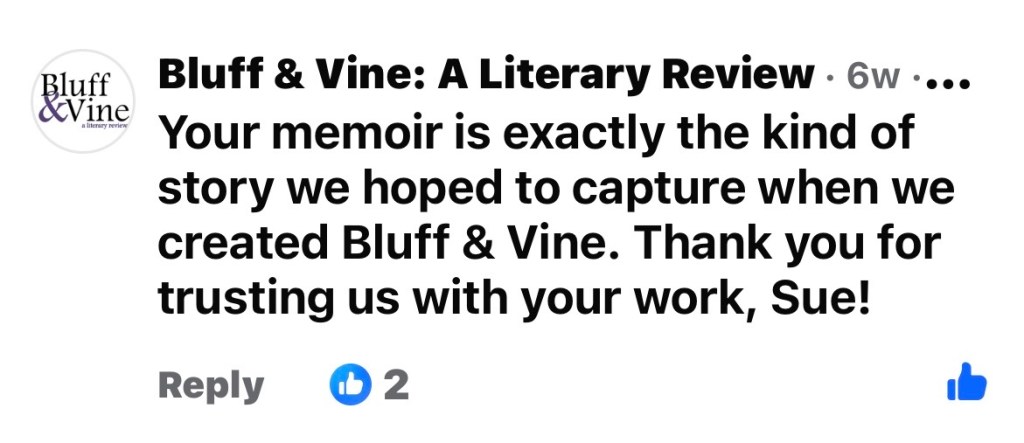
The memoir titled My Childhood Summers at Conesus Lake is more about Sue’s parents’ live bait business than it is about her. It also includes a unique way one can make their fingerprints unreadable, and a visit to Long Point Amusement Park.

The book is composed entirely of stories from the Finger Lakes and is available at Long’s Cards and Books in Penn Yan, NY, or on Amazon.

Two of Sue’s reviews…

Screenshot

You lived a frontier childhood right here in 20th-century upstate NY!

Thanks for sharing your memories.

Joe Mele LCRW Vice President

Book Launch

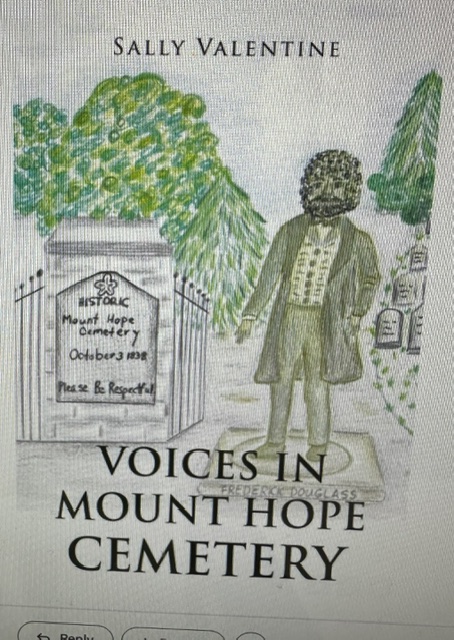
Sally Valentine has a book launch event for her new kids’ novel, Voices in Mount Hope Cemetery, this Saturday, October 17, 1:00 – 2:30, at the cemetery. If the weather cooperates, there will be an outdoor scavenger hunt for kids (and adults) in addition to the book signing. For more information, go to:

https://fomh.org/tours-events/events

Congratulations, Sally, from your friends at Lilac City Rochester Writers

Peer Critique

Our final critique of 2026 is coming up on October, 24 th.   This is a great time to
get a manuscript of up to 2500 words looked at.  If you aren’t a member, this is a
fantastic opportunity to see what LCRW can contribute (in addition to the six speakers
we have each year.)
This is a LCRW function. You may participate one time only if you are a non-
member.
ALL manuscripts must be emailed to the moderator, Steve Yates at
writingsbysay@yahoo.com by MIDNIGHT on Wednesday, October 14 th (Note, this is
ten days before the critique session.) Any submissions received after that will be
handled as time permits, at the end of the critique session.
Critiques will be discussed in the order they are received.
You will be receiving a manuscript from each participant and are expected to print
it out and have your critique of their work at the meeting. (If you use MS Word’s
“Comment” option, there is no need (although it is nice) to print it out as long as you
send it to the author before the session.)
Your manuscript must be formatted using: Times Roman, Courier, Tahoma, or
Verdana font at 12 points. Margins should be to one inch. Double space.
Be sure to number your pages (Insert / Page Number). Also, it makes critiquing
easier if you insert line numbers (Open the Page Layout ribbon / Click Line Numbers in
the Page Setup section / Select your options from the popup menu.)
Save your document in: .doc, .docx, or .rtf formant. (All major word processing
programs have this capability.) All manuscripts will be converted to .pdf by the
facilitator, with line numbers inserted if you have not already done so.
Please limit your submission to about 2500 words. (You may send as many
words as you like. The person critiquing may stop at any time after 2500 words.)
Starting time is 9:00 AM Saturday, October. 24th. Please be ready to start then.
1605 Buffalo Rd, Rochester, NY 14624 Enter via the Police Annex. We are the
first room on the left. Parking is in the rear.
Please do not submit first drafts. Spend some time editing before you send it out.
All manuscripts are forwarded as soon as they are received (if you send it 15 days before
the critique, it will be sent out then) it is requested you don’t send a modified copy of
your manuscript after the original has been dispersed.
Everyone who submits a manuscript will be expected to critique all other entries
and ensure they receive a copy of your comments. (You are not required to send your
critique to the recipient before the critique, but it is useful.) In addition, we always have
people who wish to share their knowledge of writing, yet not submit. Those wishing to
only critique are always welcome.
As a reminder, please do not comment unless asked a direct question while your
ms is being critiqued. You will be given time at the end. (If we have seven manuscripts
with seven critiques, that leaves only 3:30 for each critique.)
The following information should be on the first page, before your story begins. (You
may wish to copy/paste this to your manuscript and answer them.)

 Please include your email address at the top of the page.
 Genre: (Fantasy, Romance, etc.)
 Demographic (target audience):
 How long is the final piece (short story, novel):
 Is there back story we need to know to understand what is going on:
 Where does this fit in your manuscript (i.e.: two-thirds of the way through):
 What questions do you want answered:
When critiquing, consider:
 Are the characters developed. (You may not get to this in a limited piece)
 Is there a strong sense of the setting/time.
 Is it original (Not a requirement. Some of the best stories are a retelling.)

Show – Don’t Tell

Do you know what “show don’t tell” means when discussing writing? It’s easy to explain. If you are reading, you want the words to give you a visual of the action taking place, even if it’s two people drinking coffee in a cafe. It’s one of the most difficult aspects of writing for writers to accomplish. The best advice I have been given to make sure I am showing what is happening is not to use the word “was”.

An example of telling:

Carla was angry because her husband was late getting home from work. Dinner was drying out in the oven, there was a grease splatter on her favorite blouse, and the puppy was peeing on the rug.

Take out the word ” was ” and show your reader the scene:

Carla looked at the clock again. Tim had had enough time to get home from work twice. Where had he stopped this time? She wondered why she bothered to cook a nice meal. Then she noticed the new grease stain on her favorite blouse. Crap. Would it come out? And the rambunctious puppy, though she had taken him out half an hour ago, peed on the rug at her feet. Tim had wanted the puppy, not her. The possibility of a pleasant evening had come completely undone. She turned off the oven, grabbed a cold beer and the puppy, and went out to the patio to wait.

This might not be a superb example, but I think you can SEE the difference. And yes, it takes more words to show instead of tell.

My Favorite Author By Sally Steele

How do I explain why Margaret Mitchell is my favorite author? She was such a good
writer that I’ve lost count of how many times I’ve read “Gone With the Wind.” Her novel draws
you into the culture of the antebellum South before leading you through the horrors of the Civil War and Reconstruction through the eyes of Scarlett O’Hara, who vies with Melanie for Ashley’s affections, only to learn too late that she really loves Rhett.


Margaret Mitchell has perfect pacing of narrative, dialogue, and description. The reader
gets so lost in the story, you don’t see the technical aspects of writing. You don’t stumble over badly written sentences, inconsistent characters, or data dumps. The book runs smoothly with each well-rounded character easily identifiable from the other. Couple that with the accurate historical aspect of a country at war with itself, and you are not only entertained, but you’re also educated.


I think Margaret Mitchell was the best writer of fiction in modern memory, and she
deserved all the accolades she got for writing THE great American novel. I admire her ability
and imagination that gave us such a compelling read about strong characters surviving the rigors of war and their own ambitions. They are so real you would expect to find their graves in a Confederate cemetery near Atlanta. I’ve never read any other book that could draw me so fully into the story that I feel I’m there. How do you top that?

Coping With Rejection

Submitted by: Rick Iekel

From an early age of seven and for the rest of her life, my mother penned fascinating lyric verses. Complete with a second stamped self-addressed envelope, she submitted her efforts for publication in a variety of magazines. Like so many others, she routinely offered these creations in hope of acceptance.

          No sooner had the postal delivery man pulled away from the mailbox than Helen would climb the steps to the roadside mailbox. There might be a response from one of the publications. The presence of one or more thick, familiar-looking envelopes spelled disappointment.

Over the weeks and months, the receipt of so many rejections was taking its toll. Never one to be conquered by the process, Helen devised a plan. During Helen’s next trip to town ( She lived in the country), she looked for the perfect object and happily came home with a silver platter with a glass-covered bottom. She cleaned it up and went to work on her project.

From dozens and dozens of rejection letters, she cut phrases into small strips: “Sorry. Have a quota.”, “Not this time”. ”Too serious for us.”, etc. She spread these strips this way and that, some on an angle, some upside-down, filling the entire bottom of the platter with expressions – all saying, “NO !”. Gluing these to the bottom, she replaced the glass and held her trophy up high.

Hosting the next meeting of the village Poetry Society, Helen served refreshments on her new party tray to the delight and compliments of fellow poets.

What Is Worse Than A Rejection Letter?

What is worse than receiving a reject letter? Not getting a response at all. Was your
submission received? Was it read or is it buried with other entries in some junior editor’s
inbox, and never to see daylight again?
A good rejection will tell you why the publisher didn’t accept your story and may give
some insight into how to improve it so you can submit it elsewhere.
If you’ve been rejected, you are not alone. Many famous authors received rejection
letters before their book got to the right publisher.

Here are some examples:
A Time to Kill – John Grisham – 12 publishers and 16 agents rejected the book
Carrie – Stephen King – 30 rejections
Chicken Soup for the Soul – John Canfield & Mark Victor Hansen – 144 rejections
Gone with the Wind – Margaret Mitchell – 38 rejections
Harry Potter/The Sorcerer’s Stone – J.K Rowlings – 12 rejections
Jonathan Livingston Seagull – Richard Bach – 18 rejections
Lord of the Flies – William Golding – 20 rejections
The Diary of a Young Girl – Anne Frank – 15 rejections
The Help – Kathryn Stockett – 60 rejections
The Tale of Peter Rabbit – Beatrix Potter – 6 rejections


If you believe in your story, don’t give up. Stick with it and keep improving your craft.
Lilac City Rochester Writers welcome all levels of experience and our aim is to make
you a better writer.


BarbaraHelene Smith, Author
Uprooting the Family Tree
The Connie Murphy Mysteries
Assume Nothing

Just Released!

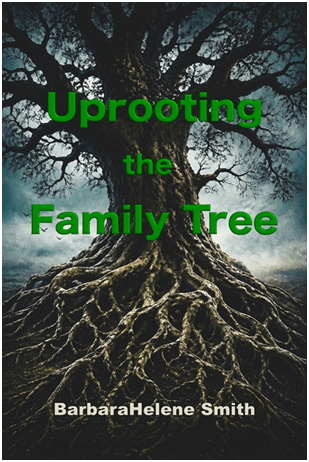
Uprooting the Family Tree, a contemporary fiction novella, by BarbaraHelene Smith is now available.

Amanda Duncan knew she was adopted, but when she’s told her birth mother is her adoptive mother’s younger sister, Amanda goes to California to learn more about her. There she teams up with a retired detective to search for the truth. Together they get entangled in a twenty-five-year-old cold case involving rape, kidnapping and murder. After critical evidence is mysteriously destroyed, the identities of Amanda’s birth mother and the rapist may never be solved.

Uprooting the Family Tree is available at Amazon.com as an e-book and paperback.

Also available on Amazon are the previously published Connie Murphy Mysteries and Assume Nothing. The Connie Murphy Mysteries are about a senior drug investigator dedicated to protecting public health and safety. The stories are based on the author’s seventeen years as an investigator with the Food and Drug Administration. The four mysteries in Assume Nothing are about ordinary women who find themselves in extraordinary situations while looking for the truth.

Let me know how you like Uprooting the Family Tree, and please write a review (hopefully a good one 😊) on Amazon.com.

BarbaraHelene Smith is an active member of LCRW

Out of the Comfort Zone and into the Writing Zone

By Nicole K. Galbraith

I’m a big fan of staying in my comfort zone. Who doesn’t want to be comfortable? I’ll watch a documentary of climbing Mt. Everest from the safety of my living room. While that’s an extreme example, sharing your writing for the first time feels just as terrifying to a new writer. Always cautious, I didn’t leap out of my comfort zone when it came to writing. I took it one step at a time. If you’re a cautious writer too, this could be the right approach for you also.

Step 1: See if you really want to do this writing thing

I always liked creative writing, but after college, I only wrote short pieces as models for my students. It always reminded me that I enjoyed writing, and I’d think I should write more, then never got around to it. Then, I read a collection of Beauty and the Beast retellings that were part of the Rooglewood Fairy Tale contest. At the end of the book, there was an advertisement for another contest with Snow White retellings. For some reason, that spoke to a part of me that always wondered if I could be a writer. I wanted to see if I could do it.  I’d never written anything of that length (novella). I didn’t tell anyone, just wrote my story and sent off the submission. I got an honorable mention.  The honorable mention was a good ego boost. But the most important thing was that I found out that not only did I have potential as a writer, but I enjoyed it.

Step 2: Start telling people

I didn’t shout my honorable mention from the rooftops, but I did tell the people closest to me. Telling just a few people holds you accountable, because they’ll ask about your writing.  More importantly, for me, my mother noticed a sign at Barnes & Noble advertising a writing group. That was a much bigger step.  Sitting in person and writing to a prompt on the spot eliminates the anonymity that comes with sending a story off to a judge who is a stranger.  It took me a while to feel comfortable sharing, but once other people know, it makes the idea of seeing yourself as an aspiring writer easier.

Step 3: Go into lockdown

Turns out, being confined to home provides lots of writing time.  When the world went into lockdown, I turned that novella into a novel. I read articles and watched videos about writing craft. I wrote the rough draft of a middle-grade novel.  Most importantly, because of the Barnes & Noble group, I was on Steve Yates’s email list and found out about LCRW’s critiques. Again, the pandemic made this easier because we were meeting over zoom, which is less intimidating than meeting in person. To be clear, I’m not encouraging anyone to release a virus so there is another shut-down. But, it is important to make time for your writing. Find a time you can devote to writing. Make writing part of your life.

Step 4: Find your people

That LCRW critique led me to join the group. That introduced me to Sally Valentine, which led me to another children’s writing group. I also started participating in Writing Battle competitions online.  It turns out writers are really a supportive group of people. Having people who have the same passion and who will support you makes all the difference. So, after you force yourself out of that comfort zone, you’ll find a whole new group of people who will help make the journey more comfortable.

Introduction to Canva

Our new member, Jess Bates, will be presenting a hands-on introduction to Canva during the Saturday, August 22 meeting. Canva calls itself a Visual Site for Everyone. It is a free online graphic design tool. You can create book covers, social media posts, presentations, business cards, videos, logos, and much more with just a few clicks. I can hear the denial comments some of you just thought. Come to the LCRW meeting and let Jess show you how easy it is to use. She will also talk about setting up your personal Instagram page and explain how useful it can be for an author. Please bring your laptop or iPad so you can “play” along during the presentation.

Directions to the Lilac City Rochester Writers meeting and times are on the home page of this easy-to-navigate website. Everyone is welcome to a one-time free visit to the group that SHOWS you how to become a better writer.