
When Your Writing Matters

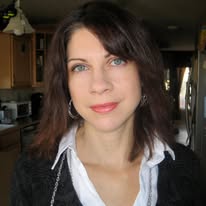
By Kim Gore

I grew up reading a very simple but joyful series called Dick and Jane. What I loved about these books with their 1950’s attired children, rosy-cheeked and naïve, wasn’t the storylines. In fact, I don’t think I could give you one plotline gleaned from the series. The stories weren’t memorable. They were told in short sentences. Nothing special or fancy. Just readable for a first grader. But I loved that the pictures helped tell the story. The children’s expressions ranged from gleeful to sour to upset.  Even before taking in the story word by word, I loved the emotions drawn on the page. It was as if watching a play, but with two-dimensional humans that spoke inside my head instead of a stage. I took to writing my own stories, using my own drawings. But my skill was limited in both departments, being that I was in public elementary school.

My Cousin Helen took my sister and me to see theatre productions. Hello Dolly. Peter Pan. The Nutcracker. Enthralled, I began to write plays. My sister and I performed them for our relatives during holidays. I was still just a little kid, not even a teenager. But to be able to make those words come alive through performance thrilled me. Again, evoking emotion from words. Facial expressions. Arm movements.

When I was fifteen, my mother introduced me to Christopher Pike. Or, at least his books. I opened up to a world of shocking horror. Teenagers, like me, with problems, like I had…and then a twist! Murder. (I don’t think my mom realized these were more or less horror novels, but…) I was shocked to read books about teens getting revenge on other kids in the most horrific of ways. Dick and Jane never did these terrible things.

But I loved it.

I immediately began filling up pages and pages with crazy, unhinged adolescents. My imagination had been released, and now I wrote novels. I didn’t care that they weren’t going to be published. Or read by someone else. I wrote for the sheer joy of creating. Inventing. Discovering where my mind wanted to go. While kids went to parties or stayed out past midnight drinking, I was in my room, scribbling away. Encouraged by my parents, who understood creativity well, as they were both prime examples of being artists in their own right.

In high school and college, I acted in plays. Again, loving every moment of evoking emotion, spilling it out beneath bright stage lights and the watchful eyes of a rapt audience. I took theatre classes in college, including a scriptwriting class. And over a weekend, I wrote a play my mom titled Something Blue. Long story short, I had it approved by the college to put onstage in their Blackbox Theatre. They gave me a stipend to use for supplies. I had a team that helped me. I directed it. We had full houses every night of the production. I sat watching the performance, listening to the audience laugh at all the right places, become silent when intense words spilled out of the actors’ mouths. People left the theatre crying, which I hadn’t expected. It had a sad ending. People felt that. I made people feel. They laughed! They cried! One person, an actor’s father, was shocked someone so young had written it.

I knew then that I wanted to be a writer.

It wasn’t that I wanted fame, to be noticed, or money. I mean, sure, I would have liked all that. But what made an impact was the way people responded. Like how I responded all those years ago after reading a story. It wasn’t the plot that held me captive. It was how the story made me feel. The way it touched me. Reached out with invisible fingers and nudged my heart. That was why I was so captivated with Dick and Jane. Watching Peter Pan. Reading Christopher Pike’s Chain Letter.

If you can make your audience feel, they will remember. And that’s been my motivation for storytelling (and my music, my art) ever since.
A LCRW Member Shares Her Writing Journey Story

Sally Steele’s Journey

I have no natural talent for writing, so it is a skill I’ve had to learn. I could blame
my high school English teachers for not preparing me to tackle the written word, but my
inattention during class is the more likely culprit. When I graduated from high school, I
couldn’t construct coherent sentences or cohesive paragraphs, not that I made any
serious attempts to try it at that time in my life.

My post-high school attempts at storytelling fell flat. I briefly considered taking
journalism in college, but I had no ideas, so I chose math and science instead. I never
did finish college anyway and the fastest computer at that time was the Cray II, and it
took up two rooms. Only big businesses, universities, and NASA had computers.

Life moved on and I got married and had a family, so any dreams I had of writing
languished. Then, after thirty-some-odd years, ideas came to me, but I still couldn’t
write a readable story. Fortunately, a night-school flyer arrived in my mailbox – the one
at the end of my driveway. (Still not up to the “everybody has a computer” era.)

Kim Gore, a member of LCRW, was teaching a class on creative writing, and I
signed up. It helped, but I still had a lot to learn. From the writing class, I heard about a
Critique Group in the Barnes & Noble at the Greece Mall on the Ridge. It’s every second
Thursday from 6:30 pm – 8 pm, and tuition is free, which fits into my budget.

At the Critique Group, I found out about LCRW. The membership fee is only $20
a year, again easy on my budget, and I have learned from seasoned writers on how to tell
a tale with clarity and color. I’ve even had a poem and an essay published in local
papers.

LCRW offers encouragement, instruction and friendship and I recommend it to
all aspiring writers. If nothing else, you’ll have fun. Don’t delay – you have a novel in
you the rest of the world should read. Come join us.

The Idea Tree – January 24 Presentation

Explore ideas for short stories or novels using The Idea Tree, a made-up concept by your happy prompt inventor, Kim Gore. From the twisted roots, to the mossy trunk, to the leaves basking in the sunlight, we will grow your idea until it stands tall and sturdy, declaring its space in the crowded forest of unfinished projects. Bring a notebook, a pen, your imagination, and the courage to read your newly created stories, your seedlings for the future formed from writing prompts.

Thanks!!!

Kim Gore

www.thebarebonesguides.com

Show-dont tell – presentation

At last Saturday's meeting we were watching a video presentation entitle "show - don't tell." After a few minutes, fussy technology reigned and I couldn't get the video restarted. Member, Kim Gore jumped up from her seat and professionally saved the day. After a bit more instruction, she gave us the following prompt that tells about something happening and asked us to write the same scene showing it to our fellow readers. 
Prompt: He was so angry that he threw the shovel across the driveway and screamed. His wife came out of the house and gave him a cup of cocoa.
****
My descriptive version: by Paul Irvine

He stared hard at the shovel, half full of snow, the ice sticking to it adding ten pounds. His frozen toes now forgotten, he kicked it, shattering the ice and his big toe, and sending him flying down the driveway on his back. The resulting scream echoed down the street, like a blast from a shotgun. His wife, already half way out the door, rushed to him, slipped and spilled the hot cocoa down his open jacket. As she hit the ground, their duo screams set off their car alarms, adding to the winter cacophony filling their neighborhood!
****
Effort to show not tell - Kathleen Plum:

It was a bitter cold wintery morning and the three feet of snow and ice on Jack’s driveway begged to be left alone. He was still steaming from the argument with his wife over their taxes; he was happy to feel the icy breeze brush his nose and cheeks as he stepped out of the house with the snow shovel. A thin, fluffy coating of snow had disguised the thick, hard layer of ice beneath it. In pure frustration, Jack threw his shovel across the driveway and screamed. But then he saw the outline of a bloody human hand, with only 3 fingers, encrusted in the ice below. Now the wind- or maybe it was the hand in the ice- took his breath away entirely. Jack was still speechless as his wife came out of the house bearing a cup a cocoa in repentance for her part in the dust-up that morning, oblivious to the macabre scene that awaited her.
****
Immediate response to telling prompt - by Sue Spitulnik

"This damn snow. I want to move south."
"You've said that for years and I agree, then you say you won't leave the kids."
"That's your line."
"Okay. It's your mother you won't leave. Go shovel before she gets here."
He put on three shirts, his insulated pants, a heavy coat and gloves. I added his knit cap and opened the door for him. Next thing I heard was a scream and a thump. I ran to the window. The shovel was five feet into the yard and he was sitting on his ass, fuming, but seemed okay. I watched. He slowly turned to get on all fours and gingerly got up. I went to the kitchen to make him a cup of hot cocoa and put a shot of whiskey in it thinking whatever works. I took it out to him. He would be nicer when his mother arrived.
****
As you can see, Paul and Kathleen followed the prompt. Sue rearranged the timeline in her writing showing that everyone wrote what came to mind with different character personalities, and different settings. This is because every author draws on their own personal experiences when writing, and no two people think alike. It was a good presentation for everyone present. Fun side note: more than one person included an argument about doing their taxes.

How to Identify Headhopping

Point of View: Vanquish Head Hopping and Identify Your Narrator

By Kim Gore

We’ve all done it. Written a story from our character’s vantage point. Added details to make it feel authentic. Described our character with amazing acuity. And then an editor or critique partner takes a look at our incredible work and asks, “Okay, but who is the main character?”

It’s like getting splashed with a bucket of cold water. Because, duh, isn’t it obvious? But no. It isn’t always. In this hands-on presentation, Kim Gore will demonstrate how to make your main character obvious to the reader, and how to recognize when you’re doing that horrid “head-hopping” writers grumble about.

We’ll be pulling out our acting skills for this one, so be prepared to be in the spotlight. You won’t want to miss your fellow writers getting their thespian on.

This is the presentation topic for the May meeting. Come visit us to gain more information.