Out of the Comfort Zone and into the Writing Zone

By Nicole K. Galbraith

I’m a big fan of staying in my comfort zone. Who doesn’t want to be comfortable? I’ll watch a documentary of climbing Mt. Everest from the safety of my living room. While that’s an extreme example, sharing your writing for the first time feels just as terrifying to a new writer. Always cautious, I didn’t leap out of my comfort zone when it came to writing. I took it one step at a time. If you’re a cautious writer too, this could be the right approach for you also.

Step 1: See if you really want to do this writing thing

I always liked creative writing, but after college, I only wrote short pieces as models for my students. It always reminded me that I enjoyed writing, and I’d think I should write more, then never got around to it. Then, I read a collection of Beauty and the Beast retellings that were part of the Rooglewood Fairy Tale contest. At the end of the book, there was an advertisement for another contest with Snow White retellings. For some reason, that spoke to a part of me that always wondered if I could be a writer. I wanted to see if I could do it.  I’d never written anything of that length (novella). I didn’t tell anyone, just wrote my story and sent off the submission. I got an honorable mention.  The honorable mention was a good ego boost. But the most important thing was that I found out that not only did I have potential as a writer, but I enjoyed it.

Step 2: Start telling people

I didn’t shout my honorable mention from the rooftops, but I did tell the people closest to me. Telling just a few people holds you accountable, because they’ll ask about your writing.  More importantly, for me, my mother noticed a sign at Barnes & Noble advertising a writing group. That was a much bigger step.  Sitting in person and writing to a prompt on the spot eliminates the anonymity that comes with sending a story off to a judge who is a stranger.  It took me a while to feel comfortable sharing, but once other people know, it makes the idea of seeing yourself as an aspiring writer easier.

Step 3: Go into lockdown

Turns out, being confined to home provides lots of writing time.  When the world went into lockdown, I turned that novella into a novel. I read articles and watched videos about writing craft. I wrote the rough draft of a middle-grade novel.  Most importantly, because of the Barnes & Noble group, I was on Steve Yates’s email list and found out about LCRW’s critiques. Again, the pandemic made this easier because we were meeting over zoom, which is less intimidating than meeting in person. To be clear, I’m not encouraging anyone to release a virus so there is another shut-down. But, it is important to make time for your writing. Find a time you can devote to writing. Make writing part of your life.

Step 4: Find your people

That LCRW critique led me to join the group. That introduced me to Sally Valentine, which led me to another children’s writing group. I also started participating in Writing Battle competitions online.  It turns out writers are really a supportive group of people. Having people who have the same passion and who will support you makes all the difference. So, after you force yourself out of that comfort zone, you’ll find a whole new group of people who will help make the journey more comfortable.

Why I Joined LCRW

By: Rick Iekel

            I really don’t read a lot. When in grade school, my teacher cautioned my mother. “You need to stop reading to your child. He is really a very poor reader.” You can bet that my mother was quite unhappy with that suggestion. As her youngest child, I guess I satisfied a need she had that made us both very happy.

            My mother was a writer – poetry mostly. She had some success, but like all writers, she experienced the defeat of rejection. Nevertheless, when she passed at the age of 84, I was the keeper of a box filled with her literary efforts. Storing that box on a basement shelf, I knew that someday I would honor her by gathering a sample of her work and write a book. Years passed. Then, while recuperating from major surgery, I pulled out that box and began the road to publishing.

            You know, you just can’t do something like that alone. Oh, the book honoring my mother seemed easy enough. But I still accepted help from another writer. That person – THANK YOU PAT – became my mentor, my cheerleader, my greatest motivator, and actually goaded me into beginning my next book.

            Another book? No, I couldn’t. Well, OK. I’ll try it.

            About that time I heard about LCRW’s quarterly Critiques. Attending my first such event as a guest, I heard and saw a gathering of supportive writers give positive feedback to a number of members who submitted their work for review. I listened as some expressed their delight at certain lines used by the author. I saw multiple points of view regarding other pieces of the author’s submission. I watched the writer sit silent and (every so often) scribble a note about some point they wanted to consider later.

            At my first opportunity (the next critique session) I submitted a portion of a story I was writing. Ten (more or less) people read my handout, considered what I wrote, and provided both positive comments and personal suggestions. Ten people read what I had written, spent their valuable time considering the pros and cons of my words, and gave me useful suggestions.  

            Did I use all their suggestions? No . . .but some, yes. As writers, we each have the right to claim our way – our words – said it best. Hearing how those words were received by a group of people who also write. That is very important, but the words remain ours, and the story is our story. We have every right to say, “Nope! I like it my way.” On the other hand, a critique by fellow writers is very valuable. In the event three or four people point out a particular segment and suggest something more appropriate, it might be wise to listen and seriously consider their well-meaning feedback.

            LCRW has a great track record of valuable critiques. In addition to meeting fellow writers, we can become better writers when we value feedback offered at critique sessions.

              Taking a Chance

                               By Rick Iekel

So, you’ve written something and you’re just not sure if it’s good as it could be. You really need someone to look it over, but, (Oh no!) I couldn’t possibly have one of my friends see it. They would probably just tell me how much they like it and that wouldn’t help. Who knows what they might think? They might even tell one of their friends how dumb I am.

Welcome to the LCRW Critique session. Three times each year, members have a chance to turn 2500 words of their manuscript over to six or seven other members who will read what you gave them and offer an objective review of your words. And you will do the same for them. Several important points guide each reviewer in the process. For example:

Reviewer should comment on the content, not the person who wrote it.

Remember, this is their story. Don’t try to make it yours.

Take it from me, this is an excellent way to learn from the valuable insight of the LCRW membership and their sensitivity to your hard work. One fine day, I heard about this critiquing process and submitted one of my short essays that was about people, the Adirondacks, kayaking, and the great outdoors. Returned to me a few days later were about a half dozen or so reviews offering wonderful feedback about my written words and some great ideas to consider to improve the piece.

Not everyone will see what you write the way you see it. Some may give advice you decide not to follow. After all, it was you who wrote it in the first place. But, when three or four members make the same suggestion, THAT is worth hearing. You would be smart to make the suggested changes. 

This may be the opportunity that you’ve been looking for. 

One review session is offered to any author without becoming a group member. Try it. You might like it. Our next critique is July 18, 2026. Please contact us via the contact page on this site to get rules and dates for the July submissions.

Why is Editing Important?

Posted byWomen Writing the West

By Heidi M. Thomas

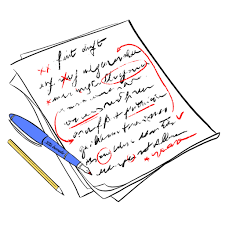
I want to tell you a little secret: Nobody writes a perfect first draft.

Not Shakespeare. Not Mark Twain. Not Stephen King.

Nobody. (Hemingway once said: “There are no great writers, only great re-writers.”)

Why hire an editor? Do you want your book to be the best that it can be?

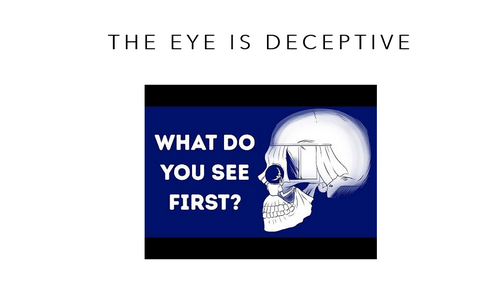
Editors are useful to authors because it’s almost impossible to be objective about your own work. As the creator, writers “fill in the blanks” of what’s actually on the page versus the vision in their head.

Y0UR M1ND 15 R34D1NG 7H15 4U70M471C4LLY W17H0U7 3V3N 7H1NK1NG 4B0U7 17.

No matter how eagle-eyed we may be, it’s easy to see on the page what we intended to say, rather than what we’ve actually said. Have you written a character named BRIAN and you keep typing BRAIN?

Even editors need editors. I can personally attest to that! My editor finds so many little things that I, as an editor, point out to my clients—repeated words, typos, misplaced commas.

Because your spell checker is not infallible. The easy answer is that even if you use a spell checker, there are a lot of bloopers it simply won’t catch because the words are actually spelled correctly. For example, one editor worked at a big national non-profit organization, and the final, critical step before any of their promotional material went out was to check, manually, that none of it contained the phrase “pubic education” where it should have said “public education.” Oops!

Here are just a few of the basic things that a competent editor can and should do to your work, for starters:

  • Fix grammar, punctuation, and spelling errors.
  • Replace passive verbs with active ones (“the gun was fired by the robber” becomes “the robber fired the gun.”)
  • Mend run-on sentences
  • Root out “wordiness” (i.e., help you get to the point more economically)
  • Make sure you’ve made the point(s) that you set out to make
  • Story flow
  • Character arc

What Can YOU do?

Read it aloud. Watch for:

  • Passive sentences Go through your writing and find instances where something happens to the subject (passive) and change them to the subject making something happen (active).  For example, “This class was taught by me,” can be changed to the active, “I taught this class.”

Words that often signal passive construction: has, had, was, were and that. Example: There was a mutter from the witnesses becomes The witnesses muttered.

  • The way you portray thoughts.

Old: This isn’t happening, Jinx thought.
New: Jinx blinked. She blinked again. It didn’t help. This isn’t happening. (Action signifies who is thinking. Don’t need the tagline thought.)

Dialog tags. Fewer “saids.” Whenever possible, use an action or a reaction. It’s stronger, helps develop character, emotion, and moves the story forward.

  • Omit Useless Words:

That (there is no doubt that… becomes:…no doubt…)

very
really
truly
absolutely
totally
suddenly

starting to
began to
as
even
just
there

  • SHOW don’t TELL Without context, words like “beautiful/ugly” and “delicious/disgusting” are meaningless. We’ve all seen the word amazing a thousand times. Try astonishing, astounding, blindsiding, dumbfounding, eye-opening, flabbergasting, or use description to show what it looks like/how it feels. The more common the word, the more readers will overlook it—and your writing. Keep a thesaurus handy and switch out pedestrian words (sadgladhappyexcited).
    Can you SHOW it through the character’s reactions/feelings?
  • Simplify your sentences wherever possible. Watch for redundant or unnecessary phrases. As writers, we need to “show, not tell” as often as possible. Yet, some writers tend to show and then tell the same information, which is redundant. Watch out for this in your manuscripts. Also, look for the redundant phrases below and others like them.
    Stand up = stand
    Sit down = sit
    Turned around = turned
    He thought to himself = He thought (or eliminated altogether by using an action)
    She shrugged her shoulders = she shrugged
    She whispered softly = she whispered
    He nodded his head = he nodded

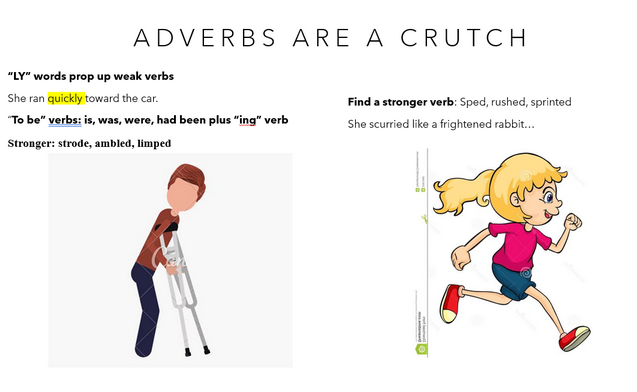
Avoid adverbs for the most part. They’re a crutch to prop up weak verbs. Use strong, descriptive verbs instead.

Example: She smiled slightly at the photographer.
Better: She grinned at the photographer. OR She quirked her mouth upward… OR She gave the photographer a shy smile.

Avoid repeating words
. Go back and reread each sentence. Have you used the same word several times within a single sentence or paragraph or on the page? If so, substitute another word with the same meaning.

Limit the description in a dialogue tag
. Beginning writers tend to load down the dialogue tags (the “he said, she said” part of the dialogue) with too many details. If you must describe what a character is doing AS he says something, put that information in a separate sentence, not in the dialogue tag. (example: …she said as she backed out of the room becomes: She backed out of the room). No tagline. Keep it short. Be careful when trying to avoid too many “saids”—you can’t laugh, smile, spit, snarl, or grouse words.

Revision & Polish Tips:
1.    Keep the focus, the theme, of the piece consistent throughout.
2.    Sentence structure: a subject—a noun or pronoun, and a predicate/verb that explains what the subject is doing.
3.    Use nouns rather than adjectives and remove overused adjectives such as very.
4.    Verbs are where the action is—choose strong ones.
5.    Avoid adverbs that diminish the strength of a sentence.
6.    Vary sentence length and rhythm within the piece.
7.    Make it personal and professional, convey the message, be specific.
Then, when you have polished your manuscript to the best of your ability, send it to a professional editor, even if you plan to submit to a publisher. You won’t be sorry.


Heidi M. Thomas

…is a freelance editor and WILLA and Will Rogers Medallion-award winning author of 12 books.

She grew up on a working ranch in eastern Montana, riding and gathering cattle for branding and shipping. Her parents taught her a love of books, and her grandmother rode bucking stock in rodeos. She followed her dream of writing, with a journalism degree from the University of Montana.  

Her books are featured on her website and on Amazon. Find her on Facebook, too.

A LCRW Member Shares Her Writing Journey Story

Sally Steele’s Journey

I have no natural talent for writing, so it is a skill I’ve had to learn. I could blame
my high school English teachers for not preparing me to tackle the written word, but my
inattention during class is the more likely culprit. When I graduated from high school, I
couldn’t construct coherent sentences or cohesive paragraphs, not that I made any
serious attempts to try it at that time in my life.

My post-high school attempts at storytelling fell flat. I briefly considered taking
journalism in college, but I had no ideas, so I chose math and science instead. I never
did finish college anyway and the fastest computer at that time was the Cray II, and it
took up two rooms. Only big businesses, universities, and NASA had computers.

Life moved on and I got married and had a family, so any dreams I had of writing
languished. Then, after thirty-some-odd years, ideas came to me, but I still couldn’t
write a readable story. Fortunately, a night-school flyer arrived in my mailbox – the one
at the end of my driveway. (Still not up to the “everybody has a computer” era.)

Kim Gore, a member of LCRW, was teaching a class on creative writing, and I
signed up. It helped, but I still had a lot to learn. From the writing class, I heard about a
Critique Group in the Barnes & Noble at the Greece Mall on the Ridge. It’s every second
Thursday from 6:30 pm – 8 pm, and tuition is free, which fits into my budget.

At the Critique Group, I found out about LCRW. The membership fee is only $20
a year, again easy on my budget, and I have learned from seasoned writers on how to tell
a tale with clarity and color. I’ve even had a poem and an essay published in local
papers.

LCRW offers encouragement, instruction and friendship and I recommend it to
all aspiring writers. If nothing else, you’ll have fun. Don’t delay – you have a novel in
you the rest of the world should read. Come join us.

Critique Guidelines

Our first of three critiques is coming up on Saturday, March 22. This is a great time to get a manuscript of up to 2500 words looked at.  If you aren't a member, this is a fantastic opportunity to see what LCRW can do for you (in addition to the six presentations we have each year.)

This is a LCRW function. You may participate one time only if you are a non-member. You must be a member to critique.

ALL manuscripts must be emailed to the moderator, Steve Yates at writingsbysay@yahoo.com by MIDNIGHT on Wednesday, July 12th. (Note, this is ten days before the critique session.) Any submissions received after that will be handled as time permits, at the end of the critique session.

Critiques will be discussed in the order they are received.

You will be receiving a manuscript from each participant and are expected to print it out and have your critique of their work at the meeting, or email the author your notes, and attend the meeting also.

Your manuscript must be formatted using: Times Roman, Courier, Tahoma, or Verdana font at 12 points. Margins should be to one inch. Double space.

Be sure to number your pages (Insert / Page Number). Also, it makes critiquing easier if you insert line numbers (Open the Page Layout ribbon / Click Line Numbers in the Page Setup section / Select your options from the pop-up menu.)

Save your document in: .doc, .docx, or .rtf formant. (All major word processing programs have this capability.) All manuscripts will be converted to .pdf by the facilitator, with line numbers inserted if you have not already done so.

Please limit your submission to about 2500 words. (You may send as many words as you like. The person critiquing may stop at any time after 2500 words.)

Starting time is 9:00 AM Saturday, March 22th. Please be ready to start then.

1605 Buffalo Rd, Rochester, NY 14624 Enter via the Police Annex door at the back of the building. There is plenty of parking. We meet in the first room on the left.

Please do not submit first drafts. Spend some time editing before you send it out. Also, it is requested you don’t send a modified copy of your manuscript after the original has been dispersed. (When Steve receives a manuscript, he will send it out to those who have already submitted. He will send all the manuscripts at the deadline.

Everyone who submits a manuscript will be expected to critique all other entries and ensure they receive a copy of your comments. (You are not required to send your critique to the recipient before the critique, but it is useful.) In addition, we always have people who wish to share their knowledge of writing, yet not submit.

NEW: It was decided at the last critique that, no matter how many entries and volunteers we have, we will all be at one table. That may force us to extremely limit your time to present your critique. Therefore, you must be sure to have everything you wish to say on the paper copy to return to the author.


The following information should be on the first page, before your story begins. (You may wish to copy/past this to your manuscript and answer them.)

· Please include your name and email address at the top of the page.

· Genre: (Fantasy, Romance, etc.)

· Demographic (target audience):

· How long is the final piece (short story, novel):

· Is there back story we need to know to understand what is going on:

· Where does this fit in your manuscript (i.e.: two-thirds of the way through):

· What questions do you want answered:

When critiquing, consider:

· Are the characters developed. (You may not get to this in a limited piece)

· Is there a strong sense of the setting/time.

· Is it original (Not a requirement. Some of the best stories are a retelling.)
Critique Rules

Our second of three critiques is coming up on Saturday, July 22. This is a great time to get a manuscript of up to 2500 words looked at.  If you aren't a member, this is a fantastic opportunity to see what LCRW can contribute (in addition to the six speakers we have each year.)

This is a LCRW function.  You may participate one time only if you are a non-member. This applies to writers and guest critiquers.

          ALL manuscripts must be emailed to the moderator, Steve Yates at writingsbysay@yahoo.com by MIDNIGHT on Wednesday, July 12th.  (Note, this is ten days before the critique session.)  Any submissions received after that will be handled as time permits, at the end of the critique session.

          Critiques will be discussed in the order they are received.

          You will be receiving a manuscript from each participant and are expected to print it out and have your critique of their work at the meeting.

          Your manuscript must be formatted using: Times Roman, Courier, Tahoma, or Verdana font at 12 points.  Margins should be to one inch.  Double space.

Be sure to number your pages (Insert / Page Number).  Also, it makes critiquing easier if you insert line numbers (Open the Page Layout ribbon / Click Line Numbers in the Page Setup section / Select your options from the pop-up menu.)

Save your document in: .doc, .docx, or .rtf formant.  (All major word processing programs have this capability.)  All manuscripts will be converted to .pdf by the facilitator, with line numbers inserted if you have not already done so.

          Please limit your submission to about 2500 words.  (You may send as many words as you like.  The person critiquing may stop at any time after 2500 words.)

          Starting time is 9:00 AM Saturday, July 22th. Please be ready to start then.

          1605 Buffalo Rd, Rochester, NY 14624 Enter via the Police Annex.  We are the first room on the left.  Parking is in the rear.

          Please do not submit first drafts.  Spend some time editing before you send it out.  Also, it is requested you don’t send a modified copy of your manuscript after the original has been dispersed. (When I receive a manuscript, I will send it out to those who have already submitted. I will send all the manuscripts at the deadline.

          Everyone who submits a manuscript will be expected to critique all other entries and ensure they receive a copy of your comments.  (You are not required to send your critique to the recipient before the critique, but it is useful.)  In addition, we always have people who wish to share their knowledge of writing, yet not submit.  Those wishing to only critique are always welcome.

          NEW: It was decided at the last critique that, no matter how many entries and volunteers we have, we will all be at one table. That may force us to extremely limit your time to present your critique. Therefore, you must be sure to have everything you wish to say on the paper copy to return to the author.


The following information should be on the first page, before your story begins. (You may wish to copy/past this to your manuscript and answer them.)

·       Please include your email address at the top of the page.

·       Genre: (Fantasy, Romance, etc.)

·       Demographic (target audience):

·       How long is the final piece (short story, novel):

·       Is there back story we need to know to understand what is going on:

·       Where does this fit in your manuscript (i.e.: two-thirds of the way through):

·       What questions do you want answered:

          When critiquing, consider:

·       Are the characters developed.  (You may not get to this in a limited piece)

·       Is there a strong sense of the setting/time.

·       Is it original (Not a requirement.  Some of the best stories are a retelling.)
 

Our first of three critiques is coming up on Saturday, March 25.

This is a great time to get a manuscript of up to 2500 words looked at

          ALL manuscripts must be emailed to the moderator, Steve Yates at writingsbysay@yahoo.com by MIDNIGHT on Wednesday, March 15th.  (Note, this is ten days before the critique session.)  Any submissions received after that will be handled as time permits, at the end of the critique session.

Please include your email address at the top of the page. Non-members are welcome to have one piece critiqued, without joining the group.

          Critiques will be discussed in the order they are received.

          You will be receiving a manuscript from each participant and are expected to print it out and have your critique of their work at the meeting.

          Your manuscript must be formatted using: Times Roman, Courier, Tahoma, or Verdana font at 12 points.  Margins should be to one inch.  Double space.

Be sure to number your pages (Insert / Page Number).  Also, it makes critiquing easier if you insert line numbers (Open the Page Layout ribbon / Click Line Numbers in the Page Setup section / Select your options from the popup menu.)

Save your document in: .doc, .docx, or .rtf formant.  (All major word processing programs have this capability.)  All manuscripts will be converted to .pdf by the facilitator, with line numbers inserted if you have not already done so.

          Please limit your submission to about 2500 words.  (You may send as many words as you like.  The person critiquing may stop at any time after 2500 words.)

          Starting time is 9:00 AM Saturday, July 24th. Please be ready to start then.

          Please do not submit first drafts.  Spend some time editing before you send it out.  Also, it is requested you don’t send a modified copy of your manuscript after the original has been dispersed to the group.

·                 Everyone who submits a manuscript will be expected to critique all other entries and ensure they receive a copy of your comments.  (You are not required to send your critique to the recipient before the critique, but it is useful.)  In addition, we always have people who wish to share their knowledge of writing, yet not submit.  Those wishing to only critique are always welcome. 

The following information should be on the first page, before your story begins. (You may wish to copy/paste this to your manuscript and answer them.)

·       Genre: (Fantasy, Romance, etc.)

·       Demographic (target audience):

·       How long is the final piece (short story, novel):

·       Is there back story we need to know to understand what is going on:

·       Where does this fit in your manuscript (i.e.: two-thirds of the way through):

·       What questions do you want answered:

         When critiquing, consider:

·       Are the characters developed.  (You may not get to this in a limited piece)

·       Is there a strong sense of the setting/time.

·       Is it original (Not a requirement.  Some of the best stories are a retelling.)