From an early age of seven and for the rest of her life, my mother penned fascinating lyric verses. Complete with a second stamped self-addressed envelope, she submitted her efforts for publication in a variety of magazines. Like so many others, she routinely offered these creations in hope of acceptance.
No sooner had the postal delivery man pulled away from the mailbox than Helen would climb the steps to the roadside mailbox. There might be a response from one of the publications. The presence of one or more thick, familiar-looking envelopes spelled disappointment.
Over the weeks and months, the receipt of so many rejections was taking its toll. Never one to be conquered by the process, Helen devised a plan. During Helen’s next trip to town ( She lived in the country), she looked for the perfect object and happily came home with a silver platter with a glass-covered bottom. She cleaned it up and went to work on her project.
From dozens and dozens of rejection letters, she cut phrases into small strips: “Sorry. Have a quota.”, “Not this time”. ”Too serious for us.”, etc. She spread these strips this way and that, some on an angle, some upside-down, filling the entire bottom of the platter with expressions – all saying, “NO !”. Gluing these to the bottom, she replaced the glass and held her trophy up high.
Hosting the next meeting of the village Poetry Society, Helen served refreshments on her new party tray to the delight and compliments of fellow poets.
What is worse than receiving a reject letter? Not getting a response at all. Was your submission received? Was it read or is it buried with other entries in some junior editor’s inbox, and never to see daylight again? A good rejection will tell you why the publisher didn’t accept your story and may give some insight into how to improve it so you can submit it elsewhere. If you’ve been rejected, you are not alone. Many famous authors received rejection letters before their book got to the right publisher.
Here are some examples: A Time to Kill – John Grisham – 12 publishers and 16 agents rejected the book Carrie – Stephen King – 30 rejections Chicken Soup for the Soul – John Canfield & Mark Victor Hansen – 144 rejections Gone with the Wind – Margaret Mitchell – 38 rejections Harry Potter/The Sorcerer’s Stone – J.K Rowlings – 12 rejections Jonathan Livingston Seagull – Richard Bach – 18 rejections Lord of the Flies – William Golding – 20 rejections The Diary of a Young Girl – Anne Frank – 15 rejections The Help – Kathryn Stockett – 60 rejections The Tale of Peter Rabbit – Beatrix Potter – 6 rejections
If you believe in your story, don’t give up. Stick with it and keep improving your craft. Lilac City Rochester Writers welcome all levels of experience and our aim is to make you a better writer.
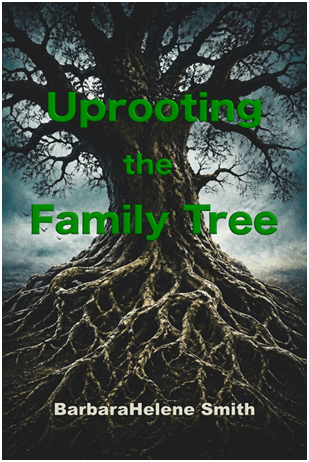
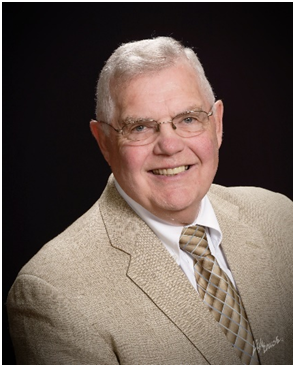
BarbaraHelene Smith, Author Uprooting the Family Tree The Connie Murphy Mysteries Assume Nothing
Uprooting the Family Tree, a contemporary fiction novella, by BarbaraHelene Smith is now available.
Amanda Duncan knew she was adopted, but when she’s told her birth mother is her adoptive mother’s younger sister, Amanda goes to California to learn more about her. There she teams up with a retired detective to search for the truth. Together they get entangled in a twenty-five-year-old cold case involving rape, kidnapping and murder. After critical evidence is mysteriously destroyed, the identities of Amanda’s birth mother and the rapist may never be solved.
Uprooting the Family Tree is available at Amazon.com as an e-book and paperback.
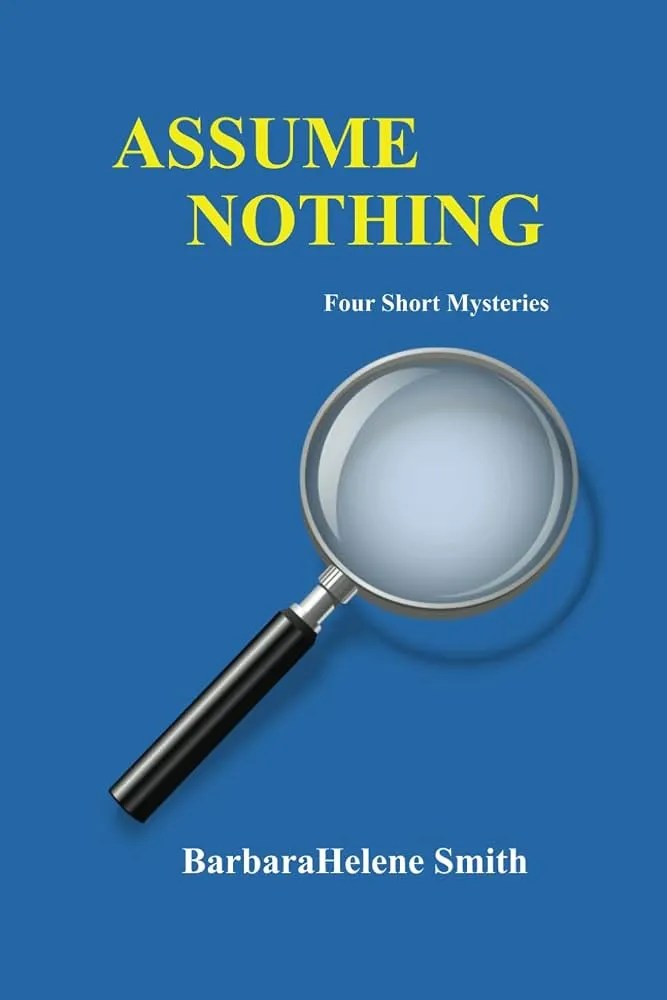
Also available on Amazon are the previously published Connie Murphy Mysteries andAssume Nothing. The Connie Murphy Mysteries are about a senior drug investigator dedicated to protecting public health and safety. The stories are based on the author’s seventeen years as an investigator with the Food and Drug Administration. The four mysteries in Assume Nothing are about ordinary women who find themselves in extraordinary situations while looking for the truth.
Let me know how you like Uprooting the Family Tree, and please write a review (hopefully a good one 😊) on Amazon.com.
I’m a big fan of staying in my comfort zone. Who doesn’t want to be comfortable? I’ll watch a documentary of climbing Mt. Everest from the safety of my living room. While that’s an extreme example, sharing your writing for the first time feels just as terrifying to a new writer. Always cautious, I didn’t leap out of my comfort zone when it came to writing. I took it one step at a time. If you’re a cautious writer too, this could be the right approach for you also.
Step 1: See if you really want to do this writing thing
I always liked creative writing, but after college, I only wrote short pieces as models for my students. It always reminded me that I enjoyed writing, and I’d think I should write more, then never got around to it. Then, I read a collection of Beauty and the Beast retellings that were part of the Rooglewood Fairy Tale contest. At the end of the book, there was an advertisement for another contest with Snow White retellings. For some reason, that spoke to a part of me that always wondered if I could be a writer. I wanted to see if I could do it. I’d never written anything of that length (novella). I didn’t tell anyone, just wrote my story and sent off the submission. I got an honorable mention. The honorable mention was a good ego boost. But the most important thing was that I found out that not only did I have potential as a writer, but I enjoyed it.
Step 2: Start telling people
I didn’t shout my honorable mention from the rooftops, but I did tell the people closest to me. Telling just a few people holds you accountable, because they’ll ask about your writing. More importantly, for me, my mother noticed a sign at Barnes & Noble advertising a writing group. That was a much bigger step. Sitting in person and writing to a prompt on the spot eliminates the anonymity that comes with sending a story off to a judge who is a stranger. It took me a while to feel comfortable sharing, but once other people know, it makes the idea of seeing yourself as an aspiring writer easier.
Step 3: Go into lockdown
Turns out, being confined to home provides lots of writing time. When the world went into lockdown, I turned that novella into a novel. I read articles and watched videos about writing craft. I wrote the rough draft of a middle-grade novel. Most importantly, because of the Barnes & Noble group, I was on Steve Yates’s email list and found out about LCRW’s critiques. Again, the pandemic made this easier because we were meeting over zoom, which is less intimidating than meeting in person. To be clear, I’m not encouraging anyone to release a virus so there is another shut-down. But, it is important to make time for your writing. Find a time you can devote to writing. Make writing part of your life.
Step 4: Find your people
That LCRW critique led me to join the group. That introduced me to Sally Valentine, which led me to another children’s writing group. I also started participating in Writing Battle competitions online. It turns out writers are really a supportive group of people. Having people who have the same passion and who will support you makes all the difference. So, after you force yourself out of that comfort zone, you’ll find a whole new group of people who will help make the journey more comfortable.
Our new member, Jess Bates, will be presenting a hands-on introduction to Canva during the Saturday, August 22 meeting. Canva calls itself a Visual Site for Everyone. It is a free online graphic design tool. You can create book covers, social media posts, presentations, business cards, videos, logos, and much more with just a few clicks. I can hear the denial comments some of you just thought. Come to the LCRW meeting and let Jess show you how easy it is to use. She will also talk about setting up your personal Instagram page and explain how useful it can be for an author. Please bring your laptop or iPad so you can “play” along during the presentation.
Directions to the Lilac City Rochester Writers meeting and times are on the home page of this easy-to-navigate website. Everyone is welcome to a one-time free visit to the group that SHOWS you how to become a better writer.
I really don’t read a lot. When in grade school, my teacher cautioned my mother. “You need to stop reading to your child. He is really a very poor reader.” You can bet that my mother was quite unhappy with that suggestion. As her youngest child, I guess I satisfied a need she had that made us both very happy.
My mother was a writer – poetry mostly. She had some success, but like all writers, she experienced the defeat of rejection. Nevertheless, when she passed at the age of 84, I was the keeper of a box filled with her literary efforts. Storing that box on a basement shelf, I knew that someday I would honor her by gathering a sample of her work and write a book. Years passed. Then, while recuperating from major surgery, I pulled out that box and began the road to publishing.
You know, you just can’t do something like that alone. Oh, the book honoring my mother seemed easy enough. But I still accepted help from another writer. That person – THANK YOU PAT – became my mentor, my cheerleader, my greatest motivator, and actually goaded me into beginning my next book.
Another book? No, I couldn’t. Well, OK. I’ll try it.
About that time I heard about LCRW’s quarterly Critiques. Attending my first such event as a guest, I heard and saw a gathering of supportive writers give positive feedback to a number of members who submitted their work for review. I listened as some expressed their delight at certain lines used by the author. I saw multiple points of view regarding other pieces of the author’s submission. I watched the writer sit silent and (every so often) scribble a note about some point they wanted to consider later.
At my first opportunity (the next critique session) I submitted a portion of a story I was writing. Ten (more or less) people read my handout, considered what I wrote, and provided both positive comments and personal suggestions. Ten people read what I had written, spent their valuable time considering the pros and cons of my words, and gave me useful suggestions.
Did I use all their suggestions? No . . .but some, yes. As writers, we each have the right to claim our way – our words – said it best. Hearing how those words were received by a group of people who also write. That is very important, but the words remain ours, and the story is our story. We have every right to say, “Nope! I like it my way.” On the other hand, a critique by fellow writers is very valuable. In the event three or four people point out a particular segment and suggest something more appropriate, it might be wise to listen and seriously consider their well-meaning feedback.
LCRW has a great track record of valuable critiques. In addition to meeting fellow writers, we can become better writers when we value feedback offered at critique sessions.
ASSUME NOTHING is a collection of short mysteries about four ordinary women, who find themselves in extraordinary situations, while looking for the truth.
Do you like short, fast-moving mysteries with a unique protagonist?
ASSUME NOTHING is a collection of short mysteries about four ordinary women, who find themselves in extraordinary situations, while looking for the truth. Each story can be read in a couple of hours while on a beach, an airplane, by the pool, next to a fire on a cold afternoon or sitting in a comfy chair with a steaming cup of coffee, tea or glass of your favorite wine.
Search for Justice – Kelly Williams hasn’t seen her eight-year-old son since her husband gained custody after their divorce three years ago. Determined to find Tommy, Kelly enrolls in a class designed to locate missing persons. There she meets Roger Ross, who offers to help, but his trust falters when Kelly reveals a secret past. Will Roger follow his instincts or the evidence that never lies?
Vanished – If Holly Hall had a life most women would envy, why did she leave her husband? When Bill discovers Holly and half the money in their joint account are missing, he hires a private investigator to find her. The pursuing cat and mouse game reveals both Holly and Bill have been living different lives.
Family Matters – Lucinda Lawrence inherits a fortune from a total stranger. While attempting to uncover her benefactor’s identity, half-siblings begin to surface and then are mysteriously murdered. The evidence mounts against Lucinda, making her the prime suspect.
Fakes, Frauds and Forgeries – When Paige Jenkins learns her grandmother’s Santini portrait is a forgery, she initiates her own search to discover the truth. After identifying two more fake paintings, she contacts Byron Cruise, an insurance investigator, whose company insured the paintings. In her quest for answers, Paige repeatedly finds herself in the wrong place at the wrong time, and unwittingly becomes involved in robbery, kidnapping and murder.
Excerpt from Search for Justice:
Kelly drove to Tommy’s school and stared at the empty playground, not sure what to do. I could go into the building, identify myself as Tommy’s mother and take him home with me. But that would be kidnapping. Mom always said, ‘Two wrongs don’t make a right’. Besides, Tommy thinks I’m dead. It would be a shock to suddenly appeared.
She waited across the street and watched as different groups of children came out to play in the yard. When she spotted Tommy’s blue-and-white striped shirt, she left the car and hid behind a palm tree. Her heart ached. She wanted to climb the fence and hug him, but resisted the urge. I found him, she thought jubilantly. I know where he is. He’s safe and happy.
She walked to the car after Tommy’s class went inside the school. A sudden wave of panic flowed over her. Maybe I shouldn’t leave.What if Buddy takes Tommy away again?
Assume Nothing by BarbaraHelene Smith is available as an e-book and paperback at Amazon.com.
Any public group depends on volunteers to keep the organization active and worth attending. In a non-profit like LCRW, the officers, coffee maker, room set-up crew, and providers of edible goodies are all volunteers, and we are proud of them. Oftentimes, the monthly educational presenter is a group member and thus, also, a volunteer. We firmly believe in “authors helping authors.”
If you are a regular visitor to the LCRW website, you may have noticed the presentation titles and presenter names have been jumping around on our calendar. That’s a side effect of depending on volunteers. Life happens, as we say, and people need to juggle responsibilities. It’s all right. We do what’s necessary to keep the calendar full and the information flowing. By leaving all the monthly listings up, anyone can see what types of subjects we cover.
On Saturday, June 27, the presentation will be given by New York Times Best Seller Kathryn Shay. She will explain HOW to add conflict to your story. I, for one, need this class. I can write a good soap opera-type scene, but adding a separate conflict that the character has to overcome or solve and that keeps the reader turning the pages is one of my weaknesses. (So are long, wordy sentences.)
If you know Kathryn Shay as a romance writer, you are fortunate. May I also recommend her book, The Perfect Family. It’s an in-depth look at what happens to a family and its circle when one of the children comes out as gay. Until I read this warm, natural account, I did not understand the ripple effect.
And this blog post is also a grand example of how easy it is for a writer to change topics mid-essay. I think I need a class on how not to do that! The culmination remains: LCRW has many different levels of writers and wonderful volunteers that make our group worth belonging to.
Come visit us. Your first time attending is always free, and our dues are only $20.00 a year. Did you notice how I just changed topics again? It’s all right in this type of writing.
When my husband finally retired at age 76, we discovered music cruises. The Star Vista group charters Holland America ships and holds seven-day music parties at sea. There are eight different genres of music. In January 2026, we enjoyed our second New Orleans Jazz and Blues cruise, called The Big Easy Cruise. Live music on several different stages at the same time from noon until 1:00 AM. We boarded the ship in Ft. Lauderdale, Florida after flying from Rochester, New York. During the week, there was a 24-hour stop in New Orleans and later a 12-hour stop in Cozumel, Mexico, before returning to Lauderdale. Of course, we had to fly back to Rochester.
While in New Orleans, my husband and I were exploring the French Market near Jackson Square when we saw our Rochester friends who were also on the cruise, so we called out to them by name. We realized that it wasn’t often that one could do that in another city.
In Cozumel, we went on a submarine excursion. It was a small, white submarine that held about fifty people with windows lining each side. We did have to enter it by climbing down the ladder through the hatch on the top while it bobbed in the ocean. There are only a handful of these subs in the world. After being amazed by the underwater trip, we were back on land in Cozumel in search of an authentic Mexican restaurant. What we get in our home locale is too Americanized. Walking through the shopping center, we heard our last name called from afar. How often does that happen in a foreign country? It turned out to be the parents of Michael Christie, who plays trumpet in our favorite NOLA band led by John “Papa” Gros. Harold and Pam gave us a good recommendation.
At the end of cruise week, we arrived back in Fort Lauderdale to find the East Coast had been blasted with a snowstorm two days prior, so the airports were in chaos. American Airlines emailed us suggesting we stay an extra day in Florida. We did that on our own nickel, then decided we wouldn’t stay a second day even though they offered us cash; it wasn’t enough to cover the cost of another hotel night. We made it out of Lauderdale and landed on time in Charlotte, North Carolina, where the runways still had small but noticeable snow banks along the edges. Then the “fun” began. Delay after delay after delay, then a cancellation and rebooking. Five hours later than scheduled, we had a gate change. Ugh! At the new gate, we wondered what was to come next and heard our first names, Bob and Sue, called from within the waiting area. Turns out it was a musician friend, Jim, who had been to Vegas and was also trying to get back to Rochester, New York.
So I’m standing, talking to Jim, telling him about being called by name in the most unusual settings, when the gentleman at the podium announces he would like to talk to one of the Spitulniks. I probably gasped out loud, and my husband and I looked at each other, ready to explode if we were told we wouldn’t be getting on this particular airplane. I went to the podium, and the attendant said, so only I could hear, “I have two seats open in first class, but they’re not together. Would you and your husband like them?” Well, of course we would. Why not? At that point we felt like we deserved them, but so did everyone else. We did learn later they were offered to us because of our American Airlines credit card status. We thoroughly enjoyed feeling like the elite.
It was quite the trip, and you are probably wondering why this was posted on a writing group’s blog page. Well, you just read a memoir essay. It wasn’t full of dark family secrets, trauma, or bad news. I hope you found it interesting, and the lesson is that memoir does not have to be self-introspection. It can be a good experience that is fun to share with others.
Note: we’re booked on The Big Easy again in January 2027. starvistalive.com
Kimberly Gore is a multi-genre author whose imagination thrives on curiosity, compassion, a dash of mischief. Her young adult novel Seven Little Secrets won first place in the 2018 Next Generation Indie Book Awards, while Knucklebone captured top honors in two national competitions judged by author Cynthea Liu, literary agent Jennifer Jaeger, and the Write On Con/Reading Room Aspiring Writer’s Competition. She also penned Save Me a Song and the middle-grade adventures The Miss-Adventures of Amy and Tracy and The Wish Problem series and she’s written several “how-to” guides. Beyond the page, Gore co-wrote a screenplay optioned by Minor Distractions Entertainment, created and produced IMPRINT Journal, a local literary magazine, and has spent two decades coordinating Rochester’s largest writer’s group, hosted by Barnes & Noble in Greece, NY. A seasoned instructor and conference speaker, she’s taught creative writing for community education programs and presented on the craft of storytelling at Astronomicon, Lilac City Rochester Writers, and RIT’s StoryCon.
Sue Sevard Brockport, NY Memoirist
The idea of filling each day as a writer had never before crossed my mind until the death of my husband, Jim, in 2010. For a reason I have never understood myself, I decided to write the story of our meeting, marriage, life, and love as a gift to our children. This project took me three years to complete and 4 writing classes at RIT and 3 at Brockport State, plus multiple memberships in writing groups. When I finally completed the book and published Autumn Leaves, I felt I had given my best and left a legacy for my four children. I never expected the book to be enjoyed by friends, relatives, and readers across the United States. By the time that book was completed, I was hooked on the writer’s bug. What can I write now? As the director of the Brockport Museum & Library of Local History, I found a new mission – writing stories about Brockport’s heroes. That idea started me on a new and interesting hobby which I shared with fascinating people from Brockport’s past.