
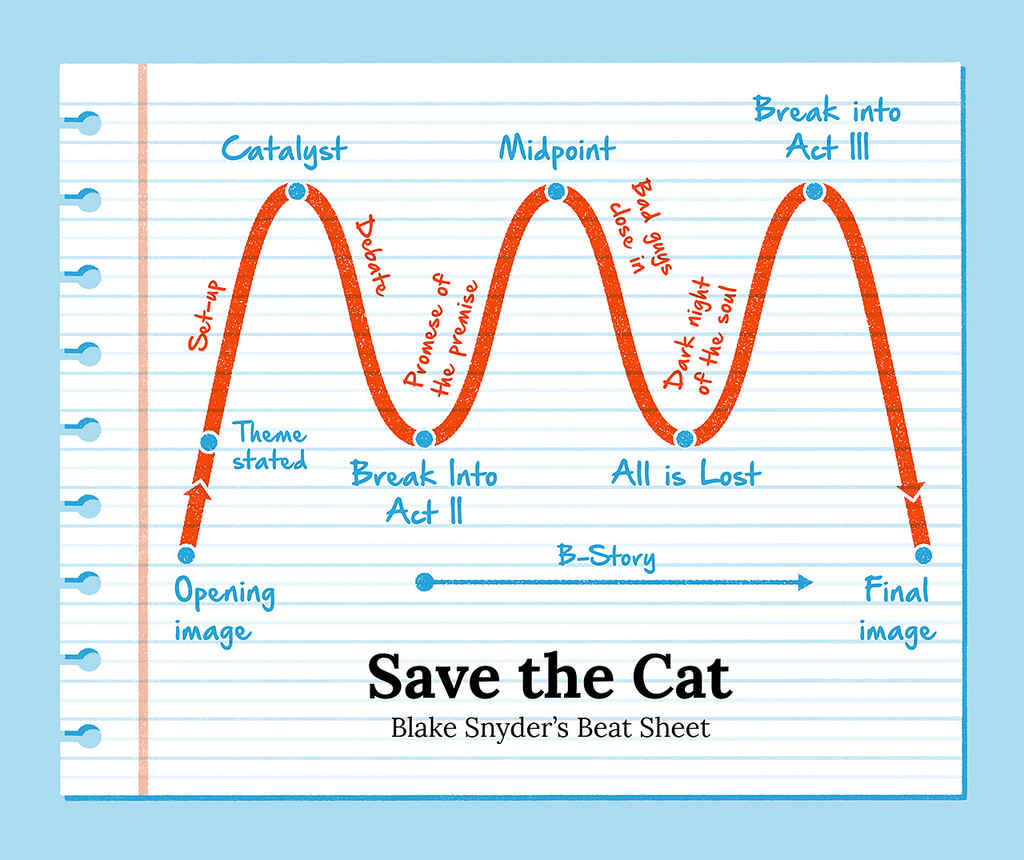
Member Rick Taubold will be giving the presentation on August 26. He will be sharing the process Blake Snyder calls “Save The Cat,” which explains how to plot/outline the beginning, middle, and end of your novel. We all need our novels to have the important points of structure to have a complete and satisfying story.
Program: Recognizing Head Hopping in Your Writing

Subscribe to continue reading
Subscribe to get access to the rest of this post and other subscriber-only content.
How to Identify Headhopping
Point of View: Vanquish Head Hopping and Identify Your Narrator
By Kim Gore
We’ve all done it. Written a story from our character’s vantage point. Added details to make it feel authentic. Described our character with amazing acuity. And then an editor or critique partner takes a look at our incredible work and asks, “Okay, but who is the main character?”
It’s like getting splashed with a bucket of cold water. Because, duh, isn’t it obvious? But no. It isn’t always. In this hands-on presentation, Kim Gore will demonstrate how to make your main character obvious to the reader, and how to recognize when you’re doing that horrid “head-hopping” writers grumble about.
We’ll be pulling out our acting skills for this one, so be prepared to be in the spotlight. You won’t want to miss your fellow writers getting their thespian on.
This is the presentation topic for the May meeting. Come visit us to gain more information.
Introduction to WordPress
On Saturday, April 22, 2023, the presentation starting at about 10:15 AM, will be an introduction to WordPress given by Sue Spitulnik.
Sue has a blog at suespitulnik.com, which is a WordPress-hosted site, and she recently designed, with input from the members, and built the new site for Lilac City Rochester Writers using WordPress. If you are on the site and look around, it looks like an easy project. But Sue will tell you she did everything multiple times to learn how to make the site easy to traverse, attractive, and user-friendly for anyone that doesn’t know how to write computer code. On Saturday, she will show the group some of the things she learned so they can build their own free sites.
It might be an idea to bring your laptop so you can follow along as Sue shows you what the tool buttons do, how to add pages, how to add a post, and use the chat feature.
Cinquain Poetry
Colleen Chesebro, author, poet, and prose metrist, from East Lansing, Michigan, presented a class on syllabic poetry during our February meeting. The syllabic verse is determined by the number of syllables per line, rather than the number of stresses. She highlighted Crapsey cinquain poetry, the style designed by Adelaide Crapsey, a 20th-century poet born in Brooklyn and raised in Rochester.
Cinquains are five-line poems that are usually about nature or a natural phenomenon. American cinquains have a 2-4-6-8-2 syllable count and do not need to rhyme. Words that create drama are built into the fourth line. The turn occurs on line five, which is the most important line. This is where you change your focus away from the drama in some interesting way. She had us write our own poems and gave examples of different types of cinquains. Poetry can be helpful with a visual impression of scenes or characters and can assist with dramatic chapter endings.
When writing and composing syllabic poetry, it’s best to use a syllable counter to check your accuracy, e.g., https://www.traveldailylife.com/syllables/ and the ProWritingAide extension (it’s free).
Cinquain Samples Written During Presentation
Poppet by Kathy Plum
Pretty
Poppet, plucky
Poppet, so sweet and so
Innocent is my playful pup
Chewer!
I Visit by Mary Lou Heilman
Grief stone
Holds down my joy
Imprisons my thinking
Endures forever that stone
Inert
In the School Hallway by Kim Gore
Chatter
Bitter review
Envy wrapped in comment
Opened in a heat-filled moment
Tatter
Sunset by S. Arthur Yates
Sunset
Steals light from life
Returns it, but not all
Some is lost, never to be seen
Old age
1978 Baseball Fans by Sue Spitulnik
Red Sox
Hate Bucky Dent
Cost them the World Series
Next Year
 Lilac City Rochester Writers