
Louise Penny – One of My Favorite Authors

Louise Penny is one of my favorite authors. I just finished reading, The Black Wolf,  her twentieth book. Her novels have been translated into over 23 languages, sold millions of copies worldwide, and repeatedly reached number 1 on the New York Times Best Seller list. She has also earned prestigious awards including multiple Agatha and Anthony Awards, and was appointed a Member of the Order of Canada and an Officer of the National Order of Quebec in 2017.
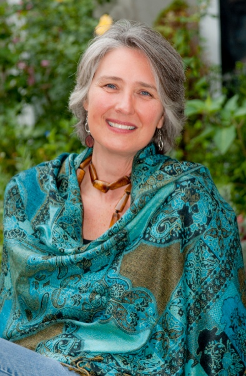
Penny is a Canadian crime-fiction author, best known for her Chief Inspector Armand Gamache of the Sûreté du Québec series. She was born on July 1, 1958, in Toronto, Canada, and has a Bachelor of Arts Degree from Ryerson Polytechnical Institute. After graduating at age 21, she embarked on an 18-year career as a radio host and journalist with the Canadian Broadcasting Corporation (CBC). She left the CBC in 1996 to take up writing. She started a historical novel but had difficulty finishing it and eventually switched to writing mysteries.

Besides her wonderful writing, there are two features I like about her books:

  1. The intricately constructed plots often reflect current events, and explore universal themes as love, friendship, loss, and redemption.
  • Her characters are unique and familiar.

Chief Inspector Armand Gamache, head of the Homicide Department of the Sûreté du Québec, inspired by Penny’s husband, Michael Whitehead, is not the typical world-weary and troubled detective, but compassionate and kind. Gamache and his team, including his second-in-command, Jean-Guy Beauvoir, investigate conspiracies and murders by unconventional means.

I suggest you start by reading her first novel, Still Life, in which she introduces the characters living in the Village of Three Pines. In Three Pines, based on her town of Knowlton, Quebec, Canada, you’ll meet an assortment of memorable residents: an artist (Clara Morrow), a psychologist-turned-bookstore-owner (Myrna Landers), a cantankerous poet (Ruth Zardo) and her pet duck (Rosa), and a gay couple who own the local bistro and bed-and-breakfast (Gabri Dubeau and Olivier Brulé). Gamache lives in Three Pines with his wife, Reine-Marie, but when the crimes are set in more distant locations, the quaint village of Three Pines and its residents are central elements of the novels.

There are many memorable quotations in her books. One I particularly like is: “Life is choice. All day, every day. Who we talk to, where we sit, what we say, how we say it. And our lives become defined by our choices. Louise Penny

I hope you enjoy reading her books as much as I do.

BarbaraHelene Smith,

Author of The Connie Murphy Mysteries

    When Your Writing Matters

    By Kim Gore

    I grew up reading a very simple but joyful series called Dick and Jane. What I loved about these books with their 1950’s attired children, rosy-cheeked and naïve, wasn’t the storylines. In fact, I don’t think I could give you one plotline gleaned from the series. The stories weren’t memorable. They were told in short sentences. Nothing special or fancy. Just readable for a first grader. But I loved that the pictures helped tell the story. The children’s expressions ranged from gleeful to sour to upset.  Even before taking in the story word by word, I loved the emotions drawn on the page. It was as if watching a play, but with two-dimensional humans that spoke inside my head instead of a stage. I took to writing my own stories, using my own drawings. But my skill was limited in both departments, being that I was in public elementary school.

    My Cousin Helen took my sister and me to see theatre productions. Hello Dolly. Peter Pan. The Nutcracker. Enthralled, I began to write plays. My sister and I performed them for our relatives during holidays. I was still just a little kid, not even a teenager. But to be able to make those words come alive through performance thrilled me. Again, evoking emotion from words. Facial expressions. Arm movements.

    When I was fifteen, my mother introduced me to Christopher Pike. Or, at least his books. I opened up to a world of shocking horror. Teenagers, like me, with problems, like I had…and then a twist! Murder. (I don’t think my mom realized these were more or less horror novels, but…) I was shocked to read books about teens getting revenge on other kids in the most horrific of ways. Dick and Jane never did these terrible things.

    But I loved it.

    I immediately began filling up pages and pages with crazy, unhinged adolescents. My imagination had been released, and now I wrote novels. I didn’t care that they weren’t going to be published. Or read by someone else. I wrote for the sheer joy of creating. Inventing. Discovering where my mind wanted to go. While kids went to parties or stayed out past midnight drinking, I was in my room, scribbling away. Encouraged by my parents, who understood creativity well, as they were both prime examples of being artists in their own right.

    In high school and college, I acted in plays. Again, loving every moment of evoking emotion, spilling it out beneath bright stage lights and the watchful eyes of a rapt audience. I took theatre classes in college, including a scriptwriting class. And over a weekend, I wrote a play my mom titled Something Blue. Long story short, I had it approved by the college to put onstage in their Blackbox Theatre. They gave me a stipend to use for supplies. I had a team that helped me. I directed it. We had full houses every night of the production. I sat watching the performance, listening to the audience laugh at all the right places, become silent when intense words spilled out of the actors’ mouths. People left the theatre crying, which I hadn’t expected. It had a sad ending. People felt that. I made people feel. They laughed! They cried! One person, an actor’s father, was shocked someone so young had written it.

    I knew then that I wanted to be a writer.

    It wasn’t that I wanted fame, to be noticed, or money. I mean, sure, I would have liked all that. But what made an impact was the way people responded. Like how I responded all those years ago after reading a story. It wasn’t the plot that held me captive. It was how the story made me feel. The way it touched me. Reached out with invisible fingers and nudged my heart. That was why I was so captivated with Dick and Jane. Watching Peter Pan. Reading Christopher Pike’s Chain Letter.

    If you can make your audience feel, they will remember. And that’s been my motivation for storytelling (and my music, my art) ever since.